
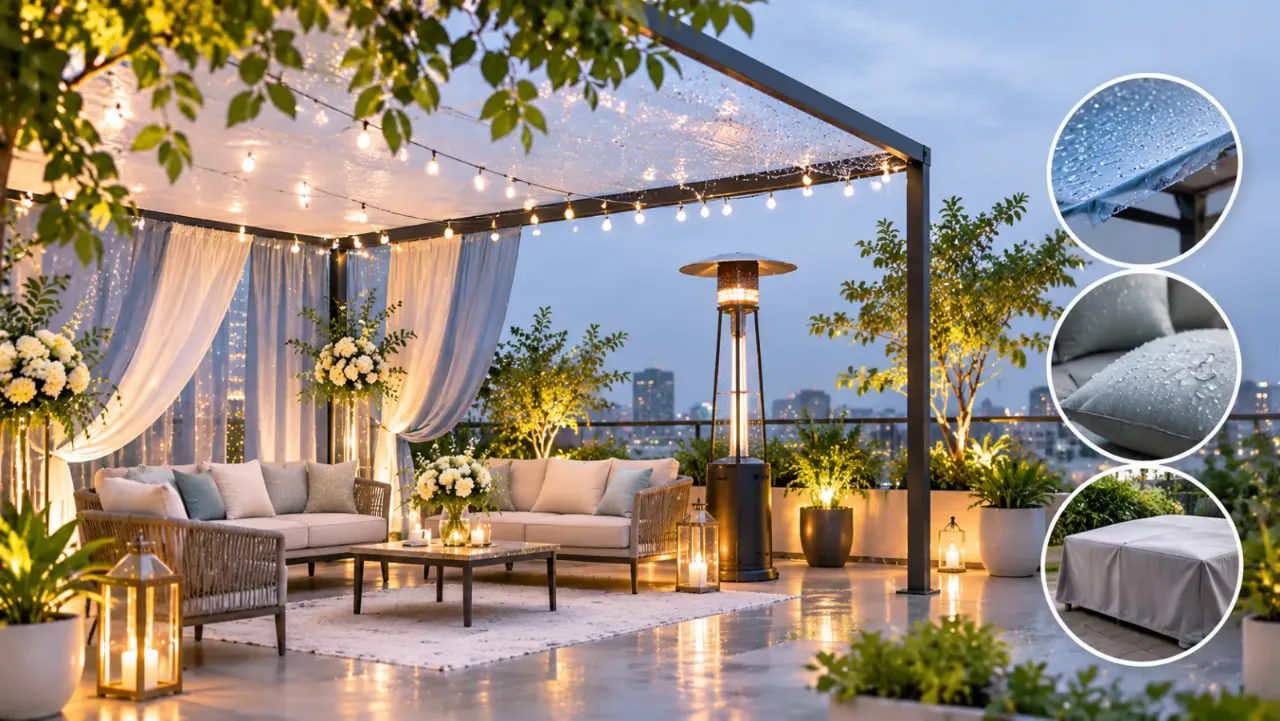
Rooftop Party Setup: Weatherproofing Decor and Seating
A rooftop party offers something an indoor venue often cannot: open skies, fresh air and beautiful views. But decorating an exposed terrace comes with challenges that are easy to overlook. Wind can disturb floral arrangements, sudden rain can damage furniture, harsh sunlight can make seating uncomfortable, and poorly planned lighting or cables can create safety risks.
The secret to a successful rooftop setup is to plan the décor around the weather rather than treating weather protection as an afterthought. From choosing suitable furniture and securing decorative elements to creating covered seating and preparing an indoor backup, every detail needs to work together.
This guide explains how to create a stylish rooftop party setup that remains practical and comfortable in changing weather conditions.
1. Check the Rooftop Before Planning the Decor
Before choosing a theme, furniture or decorative installations, understand the rooftop itself.
Not every terrace is suitable for every type of party setup. A small residential rooftop, an open restaurant terrace and a large hotel rooftop have different structural, access and safety requirements.
Start by checking:
- The permitted guest capacity and available usable area.
- The roof's approved load capacity and any restrictions on heavy equipment.
- The location of drains, water outlets and existing covered sections.
- The direction of prevailing winds and areas exposed to direct sunlight.
- Access to lifts, staircases and emergency exits.
- Available electrical connections and lighting provisions.
- Venue rules regarding tents, hanging decorations, open flames and music.
For residential rooftops, obtain the required building or society permissions before arranging an event. Never assume that a terrace can support a large crowd, temporary stage, heavy planters or water-filled decorative features without checking its structural capacity.
A qualified structural professional should assess proposed heavy installations where necessary. The venue's approval and safety requirements should guide the final layout.
2. Choose Decor Materials That Can Handle Outdoor Conditions
Materials that look beautiful indoors may not perform well on an exposed rooftop. Lightweight fabrics can blow around, untreated wood may deteriorate in rain, and delicate paper decorations can lose their shape in humidity.
Choose materials according to the expected conditions.
Fabric and Drapes
Use outdoor-suitable fabrics that are less likely to absorb moisture or become difficult to manage. Keep loose fabric panels to a minimum and ensure that all supports and attachment methods are approved for the installation.
Avoid large, unsecured fabric backdrops. They can catch the wind and place unexpected loads on their supporting structures.
Flowers and Greenery
Fresh flowers can create a beautiful rooftop setting, but heat and direct sunlight can shorten their display life.
Consider:
- Seasonal flowers that can tolerate the expected conditions.
- Smaller arrangements placed in sheltered areas.
- Suitable floral containers with stable bases.
- Durable greenery for selected decorative features.
- Artificial flowers where they are visually appropriate and can be secured safely.
Avoid placing delicate floral arrangements in exposed corners where gusts can knock them over.
Wood, Metal and Decorative Frames
Choose finishes designed for the intended outdoor exposure. Outdoor-suitable treated wood, corrosion-resistant metal and stable decorative frames are generally more practical than delicate indoor-only materials.
All temporary structures must be installed and secured by competent professionals. Do not improvise weights, tie-downs or rooftop attachments.
3. Plan Shade and Rain Protection Together
A rooftop party can become uncomfortable even before it rains. Direct afternoon sunlight can heat seating, fade decorations and make guests leave the exposed areas.
A covered zone helps protect guests and some decorative elements from both sun and rain.
Possible solutions include:
- A professionally installed canopy or approved event shelter.
- A covered dining and refreshment area.
- A permanent pergola or existing rooftop shade structure.
- Retractable shading where the venue permits it.
- An adjacent indoor area that can be used if the weather changes.
When choosing a temporary canopy, check its design, installation method, anchoring requirements and operating limits with the supplier and venue. A canopy is not automatically safe in strong wind simply because it is waterproof.
Rain protection also needs drainage planning. Make sure water can flow away safely instead of collecting around furniture, electrical equipment or guest walkways.
If rain is accompanied by strong wind, side coverings may be necessary, but they must be compatible with the shelter's design and wind limits.
4. Secure Every Decorative Element Against Wind
Wind is one of the biggest challenges when decorating a rooftop. Even on a clear evening, gusts can disturb lightweight objects and make temporary structures unstable.
Pay attention to:
- Welcome boards and directional signage.
- Tablecloths, runners and loose fabrics.
- Floral arrangements and lightweight planters.
- Decorative arches and backdrop panels.
- Umbrellas and portable shade structures.
- Hanging lights and suspended decorations.
- Balloons, paper props and other lightweight accessories.
Use professionally specified securing methods suited to the rooftop surface and installation. Do not drill into waterproofing layers, parapets or structural elements without explicit approval.
Keep weights and stabilising components positioned as designed by the supplier. Do not place improvised heavy objects where they can become trip hazards or fall towards lower levels.
Agree on wind-related removal or shutdown limits with the venue and installation team before the event. If conditions exceed the approved operating limits, remove or close the affected setup and move guests to a safe sheltered area.
5. Select Outdoor-Friendly Seating
Seating needs to remain comfortable in changing temperatures and should be suitable for the rooftop's exposure.
For a relaxed party, a combination of lounge seating, dining chairs and high tables can create different social areas.
Metal Furniture
Powder-coated or otherwise outdoor-rated metal furniture can be practical and visually versatile. However, exposed metal can become hot in direct sunlight, so cushions or shaded placement may be necessary.
Rattan and Wicker-Style Furniture
Outdoor-rated synthetic rattan is often easier to maintain than natural wicker in exposed conditions. Check that the frame is stable and that cushions are suitable for outdoor use.
Wooden Seating
Properly treated outdoor wood can add warmth and natural character. Avoid untreated indoor furniture that may swell, crack or deteriorate when exposed to moisture.
Cushions and Upholstery
Choose removable covers made from outdoor-suitable fabrics. Store cushions indoors or in waterproof storage when rain is expected.
Keep enough dry seating available for guests, and avoid placing furniture too close to rooftop edges, drainage channels or access routes.
6. Create Separate Seating Zones
A rooftop feels more organised when seating is arranged according to how guests will use the space.
Instead of placing all the furniture in one large arrangement, divide the terrace into practical zones.
Lounge Area
Use sofas, armchairs and compact tables for relaxed conversations. Position the furniture in a sheltered section where possible.
Dining Area
Choose stable tables and chairs, with enough space for guests and catering staff to move comfortably.
Standing and Social Area
High tables can work well for informal gatherings. Make sure they are stable and cannot easily topple in gusty conditions.
Quiet Corner
A smaller seating area away from speakers and the main activity zone gives guests a place to relax.
Circulation and Access
Keep clear routes between the entrance, seating, dining area and exits. Do not allow decorative furniture to obstruct emergency access, staircases or rooftop safety barriers.
The layout should also preserve safe distances from edges and other restricted areas as required by the venue.
7. Plan Rooftop Lighting for Both Atmosphere and Safety
Lighting can make a rooftop party look especially attractive after sunset, but it also needs to help guests navigate the space safely.
Use a layered approach:
- Ambient lighting: String or festoon lights in approved, professionally secured positions.
- Task lighting: Adequate illumination around food counters, bars and service areas.
- Accent lighting: Soft lighting for planters, feature walls and selected decorative elements.
- Path lighting: Clear illumination for stairs, changes in floor level and walkways.
- Emergency lighting: Suitable lighting for exits and emergency routes.
Use lighting equipment specifically suitable for the outdoor conditions in which it will operate. The protection rating of a fixture does not automatically make its plugs, connectors, cables or power distribution equipment weatherproof.
Electrical installations should be handled by a qualified electrician. Keep connections away from standing water, protect cables from damage and prevent them from crossing guest walkways without suitable approved protection.
Avoid relying entirely on decorative fairy lights. They may create atmosphere, but they are not a substitute for adequate functional lighting.
8. Choose Flooring and Rugs Carefully
Rooftop flooring can become slippery when wet, especially around dining stations, temporary bars and entrances.
Before adding decorative rugs or temporary flooring, inspect the existing surface.
Consider:
- Outdoor-rated mats with non-slip backing.
- Stable temporary flooring installed by a competent supplier.
- Rugs specifically suitable for outdoor use.
- Clear and unobstructed drainage channels.
- Suitable non-slip treatments where approved for the surface.
Avoid loose rugs, curled edges and lightweight floor coverings that can move in the wind.
If rain is expected, check whether the rooftop has adequate drainage and whether water can accumulate around seating or access routes. Do not cover drains with temporary flooring or decorative elements.
9. Prepare for Heat, Humidity and Insects
Weatherproofing is not only about protecting décor from rain. Guest comfort matters just as much.
For hot afternoons and humid evenings, consider:
- Scheduling the party during cooler hours.
- Providing shaded seating.
- Keeping drinking water easily accessible.
- Using fans that are suitable for the outdoor environment and safely secured.
- Providing comfortable seating with breathable upholstery.
- Offering insect-repellent options where appropriate.
- Keeping food and beverages protected from heat and insects.
If portable heaters are considered for colder evenings, use only equipment approved for the location and installed according to the manufacturer's requirements. Fuel-burning heaters require particular care because of ventilation and carbon monoxide risks.
10. Have a Clear Weather Backup Plan
A rooftop party should never depend on the assumption that the weather will remain perfect.
Before the event, decide what happens if there is rain, lightning, strong wind or excessive heat.
Your backup plan should specify:
- Which indoor or covered area can accommodate the guests.
- How much time is required to move furniture and decorative elements.
- Which decorations can be relocated and which should be removed.
- Who makes the final weather-related decision.
- How guests and vendors will be informed.
- What happens to electrical, sound and lighting equipment.
- Whether the catering and service arrangements can move indoors.
Monitor official weather forecasts and warnings as the event approaches. Check again before setup and during the party.
Lightning, dangerous winds or conditions beyond the venue's approved limits should trigger the agreed safety response. Do not wait for decorations or furniture to become unstable before moving people to shelter.
11. A Practical Rooftop Party Setup Checklist
Before finalising the design, review these points:
- Has the rooftop been approved for the intended event?
- Is the guest capacity confirmed?
- Have structural and load restrictions been checked?
- Are all temporary structures professionally installed?
- Are decorative items secured against wind?
- Is there a suitable covered area for sun and rain?
- Are seating materials suitable for outdoor conditions?
- Are walkways, stairs and exits unobstructed?
- Is the floor safe when wet?
- Are lighting and electrical connections suitable for outdoor use?
- Is drainage clear and functional?
- Is an indoor or covered backup available?
- Have weather-related shutdown and relocation arrangements been agreed?
A final site inspection with the venue, decorator and technical team can help identify problems before guests arrive.
Closing Thoughts
A well-designed rooftop party should feel open, inviting and visually appealing without compromising comfort or safety. The best setups combine outdoor-suitable materials, stable furniture, professionally secured decorations, practical lighting and a clear weather backup.
Instead of treating wind, rain and heat as last-minute problems, make them part of the original design process. When the seating, décor and technical arrangements are planned together, a rooftop can become a memorable party space that is prepared for changing conditions.
Explore More with Walls to Wonder
Planning an event space or refreshing your terrace? Explore Walls to Wonder's AI-powered interior design tools to experiment with styles, visualise ideas and plan your next space more confidently.
- Whole Home Visualizer
- Design My Room
- Interior Design Cost Estimate
- Interior Quotation Checker
- Rate My Room Design
- Interior Style Finder
Discover more ideas and inspiration at Walls to Wonder.
Turn this idea into a plan for your home
Visualise your space, understand the likely budget, or find a professional who can bring the idea to life.