
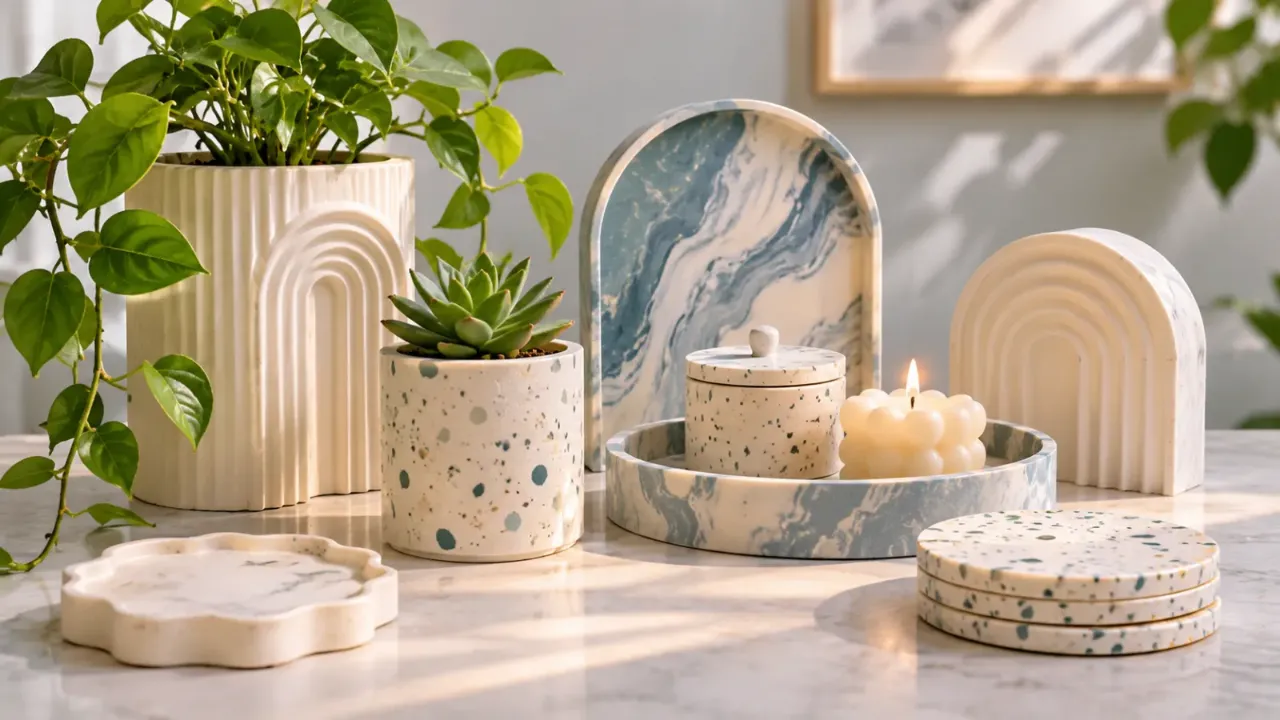
Jesmonite Planters, Trays and Coasters: Pieces Worth Buying
Not every home decor upgrade needs to be a large furniture purchase or a complete room makeover. Sometimes, a few thoughtfully chosen accessories can make a space feel more considered. Jesmonite pieces are a good example. From terrazzo-style coasters to sculptural planters and softly coloured trays, these small objects bring texture, colour and a handmade quality to everyday interiors.
Jesmonite has become popular among home decor makers because it can be moulded into different shapes, coloured with pigments and finished with a variety of patterns. But attractive photographs do not always tell you whether a piece is practical, well-made or worth its price.
If you are considering adding Jesmonite accessories to your home, it helps to know what each product does, where it works best and what to inspect before buying.
1. What Makes Jesmonite Different?
Jesmonite is a composite material available in different formulations. A commonly used type for decorative home accessories, AC100, combines a water-based acrylic liquid with a mineral base. It can be cast into moulds and customised with pigments, textures and decorative effects.
This flexibility allows makers to create pieces that look like terrazzo, stone or softly marbled surfaces. You may also find solid colours, speckled finishes, colour-blocked designs and irregular organic shapes.
Its appeal comes from a combination of:
- Design flexibility: It can be made in different shapes, sizes, colours and patterns.
- Handcrafted character: Many pieces are individually cast and finished, giving them subtle variations.
- Decorative versatility: It works well with modern, minimalist, contemporary and eclectic interiors.
- A range of finishes: Matte, textured, polished-looking and terrazzo-inspired surfaces are all possible.
However, Jesmonite is not automatically waterproof, food-safe or suitable for every type of use. The exact formulation and protective finish matter.
2. Jesmonite Planters: Worth Buying for Decorative Corners
Planters are among the most useful Jesmonite accessories because they combine function with visual interest. Their sculptural forms can make even a simple plant look like a deliberate part of the room's styling.
Where they work best
- On console tables with small indoor plants
- On open kitchen shelves for decorative greenery
- On bedside tables with compact plants
- On work desks to soften a functional setup
- In living room corners with a collection of different-sized pots
Which styles should you consider?
Terrazzo planters: These have small contrasting chips or speckles and work well in contemporary interiors. They are especially useful when you want a little pattern without introducing a bold print.
Neutral-toned planters: Beige, off-white, sand, grey and muted earthy shades are easy to coordinate with wooden furniture, stone surfaces and neutral walls.
Sculptural planters: Rounded, fluted, geometric and asymmetrical forms can act as decorative objects even when the plant is small.
Colour-blocked planters: Two-tone designs can introduce a controlled accent colour into a room.
What to check before buying
The most important consideration is water management. Jesmonite products can be porous, and a suitable sealer is needed to achieve a water-resistant surface. For a planter, look for a properly sealed finish and preferably use a removable plastic nursery pot or liner inside it.
A drainage hole should not be assumed to be sufficient protection against water damage. Check how the planter is intended to be used, whether it has a liner and whether water can reach the surface beneath it.
Worth buying when: You want a decorative cover pot for a small indoor plant, rather than a planter that will remain continuously wet.
3. Jesmonite Trays: The Most Versatile Accessory
If you are buying your first Jesmonite piece, a tray is often one of the most practical choices. It can be moved between rooms and used to organise objects that might otherwise look scattered.
Where can you use one?
- Coffee tables: Group a candle, a small vase and a decorative object together.
- Console tables: Create a neat landing spot for keys, a small bowl or other everyday essentials.
- Bedside tables: Keep a watch, jewellery and other small items in one place.
- Bathroom counters: Arrange dry accessories, provided the surface is suitably protected and kept away from standing water.
- Dressing tables: Display perfumes and jewellery as a coordinated arrangement.
Which tray shape should you buy?
Round trays: Suitable for compact arrangements and softer furniture shapes.
Rectangular trays: A useful choice for console tables, coffee tables and longer surfaces.
Organic trays: Irregular edges create a relaxed, handcrafted look and work well as decorative accents.
Compartment trays: Useful when you want to separate jewellery, keys or other small objects.
What makes a tray worth buying?
Look for a flat base, smooth edges and a finish that feels even. The tray should sit steadily without rocking. If it is intended to hold frequently handled objects, check whether the surface has a protective coating and how it should be cleaned.
Also consider its size. A tray that is too small may look lost on a large coffee table, while an oversized one can take up useful space on a narrow console.
Worth buying when: You want a versatile piece that can organise everyday objects while making a tabletop arrangement look intentional.
4. Jesmonite Coasters: Small Pieces With Everyday Use
Coasters are a relatively easy way to introduce Jesmonite into your home. They are available in individual designs and matching sets, making them suitable for both everyday use and gifting.
Popular styles include:
- Terrazzo patterns with contrasting chips
- Marble-inspired swirls
- Minimal solid-colour designs
- Geometric shapes
- Scalloped, wavy and irregular edges
What should you check?
A good coaster should have a stable base and a surface that is easy to wipe clean. Check whether the underside has felt, cork or another protective layer to prevent scratches on wooden or polished furniture.
Pay attention to the finish as well. A coaster may look beautiful but still be inconvenient if it absorbs moisture, stains easily or becomes marked by frequent use.
Jesmonite should not be assumed to be heatproof. Ask the maker about the intended temperature limits and avoid placing very hot cookware or hot vessels on it unless the specific product has been tested for that purpose.
Worth buying when: You want a decorative coaster set for everyday cold or room-temperature drinks, with a protective finish and a non-scratch underside.
5. How to Choose Colours and Finishes for Your Home
Jesmonite accessories are available in a wide range of colours, but the best choice is not necessarily the most colourful one. Think about the furniture, finishes and objects already present in the room.
For neutral interiors
Choose ivory, beige, warm grey, sand or muted taupe. These colours work well with natural wood, linen, stone and understated furniture.
For contemporary interiors
Consider charcoal, black, white or terrazzo patterns with small contrasting details. These can add definition without making a surface look overcrowded.
For earthy interiors
Olive, terracotta, clay, muted brown and stone-inspired finishes complement plants, wooden furniture and natural textures.
For colourful interiors
Choose one colour that already appears in the room and repeat it in a small accessory. This creates continuity without introducing too many competing shades.
A useful rule is to let one accessory provide the pattern while the others remain simpler. For example, a terrazzo tray can be paired with plain coasters and a neutral planter.
6. What to Check Before Buying Jesmonite Products
A product photograph can show the colour and shape, but it cannot tell you everything about the finish or construction. Before placing an order, check the following:
| Buying factor | What to look for |
|---|---|
| Finish | Even coating, consistent appearance and no obvious surface defects |
| Edges | Smooth, comfortable edges without sharp or poorly finished areas |
| Stability | A flat base that does not wobble |
| Weight | Suitable weight for the intended surface and use |
| Sealing | Clear information about the sealer and its intended protection |
| Underside | Felt, cork or another surface-protective layer where needed |
| Dimensions | Measurements that suit the table, shelf or counter |
| Care instructions | Clear guidance for cleaning, moisture and heat exposure |
Ask the seller these questions
- Which Jesmonite formulation has been used?
- Has the piece been sealed? If so, with what type of finish?
- Is it intended for indoor or outdoor use?
- Can it be exposed to regular moisture?
- What cleaning method is recommended?
- Is the product handmade, and should minor variations be expected?
These questions are particularly important when buying planters and trays, as their intended use can expose them to moisture more frequently than decorative objects.
7. Jesmonite vs Other Decorative Materials
Jesmonite is not the only material used for small home accessories. Comparing it with alternatives can help you decide whether its appearance and maintenance requirements suit your home.
| Material | Visual character | Practical consideration |
|---|---|---|
| Jesmonite | Custom colours, terrazzo effects and sculptural forms | Porosity and sealing depend on the formulation and finish |
| Ceramic | Glazed, glossy or handmade finishes | Can chip or break if dropped |
| Marble | Natural veining and a premium stone appearance | Heavy and may require careful stain management |
| Wood | Warm, natural texture | Needs protection from moisture and heat |
| Metal | Sleek, industrial or polished appearance | Can scratch, dent or show fingerprints depending on finish |
Choose Jesmonite when you like its customisable appearance and handcrafted character. Choose another material when its specific properties better suit the way you plan to use the object.
8. How to Style Jesmonite Accessories Without Cluttering a Room
Small decorative objects can make a room feel finished, but too many accessories on one surface can have the opposite effect.
- Coffee table: Use one tray to group two or three objects instead of scattering accessories across the table.
- Console table: Pair a small planter with a tray, leaving some empty surface visible.
- Bedside table: Choose one coaster or a compact tray rather than several decorative pieces.
- Work desk: Use a small tray to organise loose objects and keep the rest of the desk clear.
- Open shelving: Repeat a colour or finish across two or three shelves to create visual continuity.
Vary the height and shape of objects, but avoid making every accessory a statement piece. A balance of simple and textured surfaces usually looks more considered.
9. Care and Maintenance: Keeping Jesmonite Pieces Looking Good
Jesmonite accessories need appropriate care, particularly when they are used around water, drinks or cosmetics.
- Wipe surfaces with a soft, slightly damp cloth.
- Avoid abrasive scrubbers and harsh cleaning chemicals.
- Do not leave standing water on the surface.
- Dry the piece after accidental spills.
- Use protective pads beneath trays and coasters where necessary.
- Keep planters lined if they are intended to hold live plants.
- Follow the maker's instructions for resealing or maintaining the finish.
Jesmonite is not automatically waterproof just because it has been sealed. A sealer can improve water and stain resistance, but the level of protection depends on the product and application.
It is also important to understand food-contact limitations. The manufacturer states that Jesmonite materials have not been tested for food safety and does not recommend placing food or liquids directly on finished pieces. Use trays as decorative organisers rather than serving surfaces unless the specific product has appropriate verified food-contact suitability.
10. Which Jesmonite Pieces Are Actually Worth Buying?
If you are unsure where to start, choose based on how often you will use the product and where it will sit.
Best first purchase: A small tray
It is versatile, easy to style and can be moved between rooms. Choose a neutral or subtly patterned design that works with your existing furniture.
Best for a coffee table: A coaster set
Coasters add a small design detail without occupying much space. Check the underside and protective finish before buying.
Best for a plant corner: A decorative planter
Choose a shape and colour that complement the plant and surrounding furniture. Use a suitable liner and avoid assuming the planter is waterproof.
Best for gifting: A coordinated accessory set
A tray with matching coasters makes a thoughtful gift. Check the dimensions and packaging, particularly if the items will be transported.
Ultimately, the most worthwhile piece is the one that suits your home and has a clear purpose. A well-made tray that you use every day can be a better purchase than a large decorative object that has nowhere practical to go.
Closing Thoughts
Jesmonite planters, trays and coasters offer a way to bring handcrafted detail into a home without making major changes to the interiors. Their colours, patterns and shapes make them easy to incorporate into different design styles.
Before buying, look beyond the photographs. Check the finish, dimensions, sealing, intended use and care requirements. A little attention to these details can help you choose accessories that are not only attractive but also suitable for everyday living.
Explore More with Walls to Wonder
Thoughtful interiors come together through the right combination of colours, materials and details. Explore Walls to Wonder's AI tools to experiment with room ideas, understand design costs and discover styles that suit your space.
- Whole Home Visualizer
- Design My Room
- Interior Design Cost Estimate
- Interior Quotation Checker
- Rate My Room Design
- Interior Style Finder
Visit Walls to Wonder for more ideas and inspiration for your home.
Turn this idea into a plan for your home
Visualise your space, understand the likely budget, or find a professional who can bring the idea to life.