
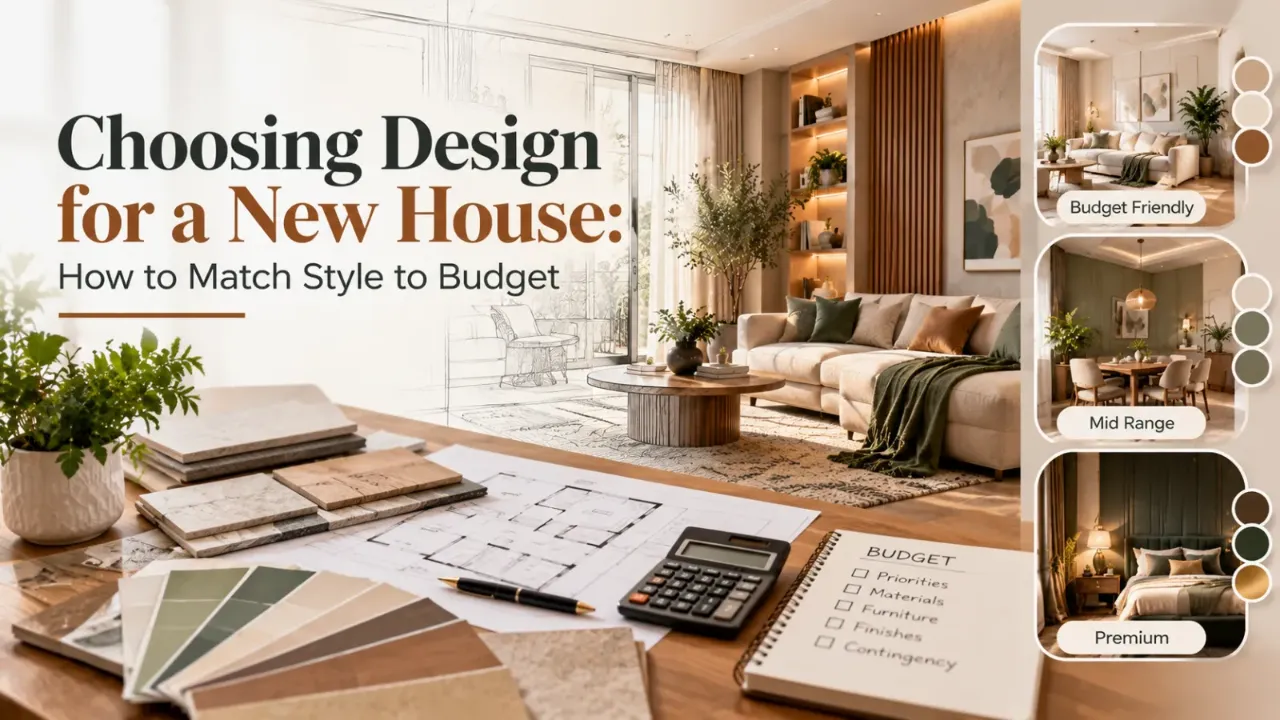
Choosing Design for a New House: How to Match Style to Budget
Designing a new house is exciting, but it can also become expensive when every room brings a new idea, finish or upgrade. A statement wall looks tempting, custom furniture seems worth the investment, and premium materials promise a polished finish. Before long, the original budget can start to feel restrictive.
The solution is not to abandon the design you love. It is to decide what matters most, understand what each choice costs and plan your home around the money you can realistically spend.
A well-designed home does not need the most expensive materials or the most elaborate features. It needs a clear plan, practical decisions and a consistent design direction.
Quick answer: To match your new house design to your budget, set a realistic spending limit, prioritise essential work, choose a cohesive design style, compare materials based on performance and cost, and keep a contingency for unexpected expenses. Spend first on elements that affect everyday comfort and long-term use; add decorative upgrades only when the essentials are covered.
1. Set the Budget Before Choosing the Design
It is easy to begin with inspiration images and select finishes before understanding their cost. However, the same design idea can have very different price points depending on the materials, dimensions, workmanship and installation involved.
Start by defining the total amount available for the project. Then divide it into broad categories such as:
- Essential construction-related or finishing work, where applicable
- Kitchen and bathroom requirements
- Storage and wardrobes
- Furniture and furnishings
- Lighting and electrical additions
- Decorative finishes and accessories
- Professional fees, delivery and installation
- A contingency for unexpected costs
The exact allocation will depend on whether your house is a bare shell, semi-finished or already fitted with essential services. Avoid assigning every rupee to visible design features while leaving no room for installation, transport or last-minute adjustments.
A budget is most useful when it reflects the complete cost of creating a functional home, not just the price of the products you see in a showroom.
To start planning, try the Walls to Wonder Interior Design Cost Estimate. It helps you explore a room-wise budget based on your home, selected work and finish preferences.
2. Choose a Design Style You Can Maintain Consistently
A design style influences more than appearance. It affects material selection, furniture shapes, finishes, lighting and the number of decorative elements you may want to introduce.
For example, a simple contemporary home may use clean-lined furniture, restrained finishes and a limited colour palette. A traditional or richly layered interior may require more detailed woodwork, decorative elements and specialised finishes.
Neither style is automatically cheaper. The cost depends on how it is executed.
Choose a direction that suits your preferences and then apply it consistently across the home. Repeating a few finishes and colours can create a coordinated appearance without requiring a different premium feature in every room.
Before finalising the style, ask yourself:
- Will it work with the existing architecture and room sizes?
- Can I achieve the look using materials within my budget?
- Will the furniture and finishes suit everyday use?
- Can I add decorative details later without redesigning the room?
A clear design direction makes it easier to compare alternatives and prevents expensive choices that do not work together.
3. Prioritise What Your Home Needs First
Not every design feature deserves the same level of investment. Some decisions affect how comfortably you live in the house, while others mainly change its appearance.
Begin with the essentials: functional layouts, adequate storage, comfortable lighting, suitable circulation space and materials that can withstand daily use. Once these are planned, consider the features that make the home more personal.
- Essential: Storage, practical furniture, suitable lighting and finishes that meet everyday needs.
- Important: A feature wall, upgraded hardware, decorative lighting or a more refined finish in a frequently used space.
- Optional: Elaborate panelling, extra decorative details, premium accessories or upgrades that can be added later.
This does not mean decorative elements are unimportant. It means they should fit into the budget after the parts of the home you depend on most have been planned.
4. Spend Strategically on Materials and Finishes
Materials can change the appearance and cost of a room considerably. Two finishes may look similar in photographs but differ in durability, maintenance requirements, installation complexity and price.
Instead of choosing materials based on appearance alone, compare them across several factors:
- Initial purchase cost
- Installation and labour costs
- Resistance to moisture, scratches or stains, where relevant
- Cleaning and maintenance requirements
- Availability of replacement parts or matching finishes
- Expected lifespan under your household's usage
For instance, a finish that costs less initially may need more maintenance in a busy area. On the other hand, a premium material may offer little practical benefit in a location that receives limited use.
You do not need to choose the cheapest option everywhere or the most expensive option anywhere. Match the material to the purpose of the space.
5. Decide Where Custom Furniture Is Worth It
Custom furniture can help make better use of unusual dimensions, corners and storage areas. It can also increase costs because of design, material, hardware, fabrication and installation requirements.
Ready-made furniture may be suitable for spaces with standard dimensions or for items you may want to replace over time. Custom solutions can be more useful where a specific fit or integrated storage is important.
Before ordering, compare the complete cost rather than just the base price. For custom furniture, confirm the material specifications, internal layout, hardware, finish, installation and what is excluded from the quotation.
You can also mix approaches. For example, use planned storage where it is most useful and choose ready-made pieces for side tables, occasional seating or movable furniture.
This can give the home a considered appearance without making every piece a custom project.
6. Design One Room at a Time, but Plan the Whole House Together
Planning each room independently can lead to inconsistent finishes, repeated purchases and unexpected expenses. A better approach is to establish the overall design direction first, then work through the rooms in order of priority.
Start with spaces that have the greatest practical importance or require coordination across several trades, such as the kitchen, bathrooms and built-in storage. Next, plan the living and sleeping areas, followed by secondary spaces and decorative upgrades.
Before finalising individual rooms, check that the decisions work together:
- Are the main flooring and wall finishes coordinated?
- Do the colours and materials complement one another?
- Are electrical points and lighting planned around furniture?
- Is storage adequate without blocking circulation?
- Are repeated materials being purchased consistently where appropriate?
A whole-house plan helps you make room-by-room decisions without losing sight of the total budget.
Use the Walls to Wonder Whole Home Visualizer to explore a coordinated design concept based on your floor plan. Treat the visual result as a planning aid, not a replacement for verified measurements or technical drawings.
7. Keep Decorative Features Focused
Feature walls, ceiling treatments, mirrors, decorative lights and wall panels can add personality to a home. However, adding several statement features to every room can increase costs and make the overall design feel busy.
Choose a small number of features that create the greatest visual impact. A well-proportioned headboard wall, a carefully planned living-room focal point or a distinctive light fixture may be enough to give a room character.
Keep the surrounding finishes simpler so the feature has room to stand out.
If your budget is limited, consider postponing some decorative work. Accessories, artwork and selected furnishings can often be introduced gradually, provided the underlying layout, wiring and installation requirements have been planned correctly.
8. Compare Quotations Before Committing
A low quotation is not necessarily the most economical choice, and a high quotation does not automatically guarantee better quality.
Compare quotations on the same scope of work. Check the materials, dimensions, quantities, finishes, hardware, installation, delivery, taxes where applicable, payment milestones and exclusions.
If one quote is significantly lower than another, ask what accounts for the difference. The cheaper option may omit an important item or specify a different material.
Keep written records of agreed specifications and any changes. This makes it easier to manage costs and reduces the risk of misunderstandings during execution.
Before approving a proposal, use the Walls to Wonder Interior Quotation Checker to review scope, material details, payment terms and potential gaps. Its results are guidance; final costs still depend on verified measurements, specifications and contractor terms.
9. Keep a Contingency and Plan Upgrades in Stages
Even a well-planned project can involve unexpected expenses. Measurements may change, existing conditions may require attention, or a selected item may become unavailable.
Set aside a contingency appropriate to the project's uncertainty and keep it separate from the money allocated to planned purchases. Avoid treating it as an automatic allowance for decorative upgrades.
If the budget is tight, divide the design into stages. Complete essential and difficult-to-change work first. Add movable furniture, artwork and non-essential decorative features later when funds allow.
Be careful with anything that would be expensive or disruptive to add afterwards. Electrical provisions, plumbing, waterproofing and concealed work should be planned at the appropriate stage rather than postponed without professional advice.
10. Review the Design Before Approving It
Before confirming the final plan, review each room in context. Check the layout, dimensions, storage, furniture clearances, lighting, materials and total cost.
Ask for a clear breakdown of what is included and what remains your responsibility. Confirm that the design can be executed within the agreed budget and that any proposed changes are documented before work proceeds.
A visual concept can help you understand the intended look, but it should not replace accurate measurements, technical drawings, material specifications or a detailed quotation.
The aim is to make the major decisions while there is still time to compare alternatives—not after the work has started.
A Final Thought
Choosing a design for a new house is about balancing aspiration with practicality. You can create a home that feels cohesive, comfortable and personal without spending equally on every room or selecting premium finishes throughout.
Start with a realistic budget, prioritise what affects daily life, compare materials carefully and reserve decorative upgrades for the places where they add genuine value. With a clear plan, your budget becomes a tool for making better decisions rather than a limitation on your design.
Plan Your Home Before You Spend
Explore your design direction, estimate the likely cost and review quotations before making major commitments.
Frequently Asked Questions
1. How do I choose a design for a new house on a limited budget?
Set a realistic overall budget, identify essential requirements and choose a consistent design direction. Compare material and furniture options, and postpone non-essential decorative features until the main work is covered.
2. Which part of a new house should I prioritise first?
Prioritise functional layouts, essential services, storage, lighting provisions and finishes suited to daily use. The order will depend on the home's current condition and which decisions need to be completed before other work can proceed.
3. Is custom furniture always more expensive than ready-made furniture?
Not in every situation, but custom furniture often involves additional design, fabrication and installation costs. Compare the full specification and price, and use custom solutions where fit or storage needs justify them.
4. How can I make a home look expensive without spending too much?
Use a coordinated colour palette, consistent finishes, suitable lighting, good proportions and a few carefully chosen focal points. A well-planned layout and restrained styling can make a stronger impression than adding many costly decorative features.
5. Should I finish the entire house at once?
Complete essential and technically difficult work according to a coordinated plan. If necessary, postpone movable furniture and selected decorative items, but plan any concealed services or provisions before the relevant work is closed up.
6. Why should I compare interior design quotations carefully?
Quotations may differ in materials, quantities, hardware, labour, installation and exclusions. Comparing the same scope of work helps you understand the actual cost and avoid choosing an option based on price alone.
Get a personalised estimate for your home
Choose your rooms, materials and preferences to understand a practical interior budget before you commit.