
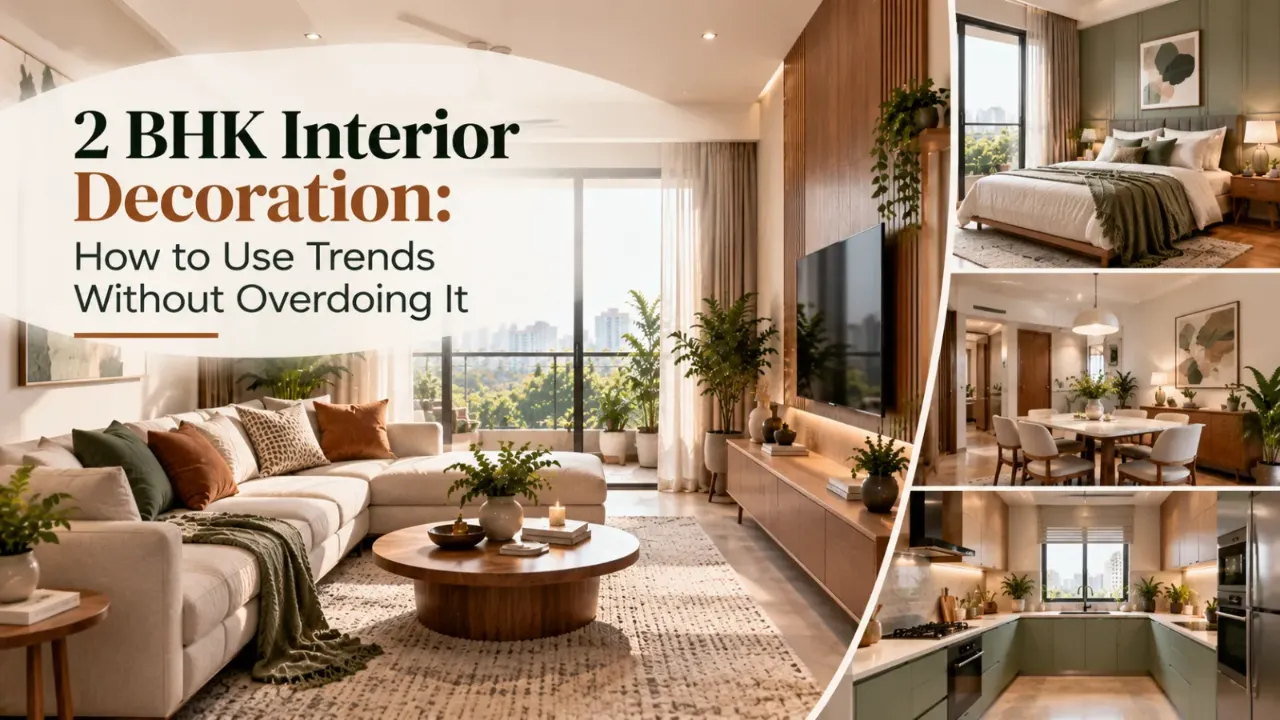
2 BHK Interior Decoration: How to Use Trends Without Overdoing It
Decorating a 2 BHK home is often about finding the right balance between style and everyday comfort. You want your living room to feel current, your bedrooms to reflect your personality and your kitchen to look polished. But when every new trend makes its way into the same home, the result can feel crowded, inconsistent or difficult to maintain.
A trending colour, curved sofa, fluted panel or statement light can add character to a space. The challenge is knowing which ideas suit your home, which ones deserve a permanent place and which are better left as temporary inspiration.
The goal is not to avoid trends altogether. It is to use them selectively so that your home feels contemporary without losing its functionality or personal character.
Quick answer: To use trends successfully in a 2 BHK, start with a practical layout and a consistent base palette. Introduce only a few trends through accent colours, lighting, textiles or selected furniture. Prioritise storage, circulation and comfort, and avoid repeating statement features in every room.
1. Start With the Space You Actually Have
Before choosing trending furniture or decorative features, understand the dimensions and layout of your 2 BHK home. Two apartments with the same number of bedrooms can have very different proportions, storage opportunities and natural lighting.
A compact living room may not accommodate an oversized curved sofa and a large coffee table comfortably. A narrow bedroom may look crowded if you add a decorative bench, bulky bedside tables and a statement headboard without checking the available clearance.
Start by measuring the rooms and identifying the essentials. Consider where people walk, where doors open, how much storage you need and which areas receive natural daylight.
- Does the furniture fit without blocking movement?
- Is there enough closed storage to keep everyday items organised?
- Can windows, doors and cupboards open comfortably?
- Are the main walkways clear?
- Does each room have a clear purpose?
Once the practical layout is settled, you can decide which trends will enhance the space rather than compete with it.
2. Choose a Base Palette Before Adding Trending Colours
Colour trends change frequently, but replacing an entire home's colour scheme can be expensive and disruptive. A more flexible approach is to establish a base palette that works across the living room, bedrooms and shared spaces.
Choose a few complementary foundational colours for larger surfaces, such as walls, flooring and major furniture. Then introduce current colours through cushions, artwork, rugs, bedding, lampshades or a single accent wall.
For example, a neutral base can work with olive green, muted terracotta, deep blue or burgundy accents, depending on the look you prefer. You do not need to use every trending colour in the same home.
Keep the palette connected without making every room identical. A shared base colour can create continuity, while smaller variations allow each bedroom to feel distinct.
Before painting an entire wall or ordering an expensive sofa, test colours in the room's actual lighting. Natural daylight, warm bulbs and cool lighting can change how a shade appears.
3. Use Statement Furniture Selectively
Statement furniture can give a room personality, but too many visually dominant pieces can compete for attention.
If you choose a sculptural sofa, keep the coffee table and surrounding decor relatively simple. If the bed has an elaborate headboard, consider quieter bedside tables and less decorative wall treatment. A striking dining light may be enough to define the dining area without adding several other focal points nearby.
When considering a trending furniture piece, evaluate more than its appearance:
- Does it fit the room's dimensions?
- Is it comfortable for everyday use?
- Does it suit the way your household uses the space?
- Is the material easy to maintain?
- Will it work with the furniture you already own?
You do not have to replace everything to make a home feel updated. Sometimes changing the rug, cushions, lighting or one key piece of furniture is enough to create a noticeable difference.
4. Bring Trends Into the Living Room Without Overcrowding It
The living room is often the first place homeowners experiment with new styles. Layered lighting, textured walls, curved furniture, decorative mirrors and distinctive coffee tables can all add interest.
The key is to give each feature enough room to stand out.
Choose one main focal point, such as the sofa arrangement, a feature wall or a carefully styled console. Then support it with smaller, complementary elements. Avoid placing several large statement pieces in the same visual area.
Also consider the relationship between furniture and circulation. A beautiful coffee table is less useful if it makes the route between the entrance and seating area awkward. Decorative shelves may look attractive but become impractical if they reduce the usable space in a compact room.
If the living room also serves as a workspace or dining area, make sure the design supports those functions before adding decorative layers.
5. Keep Bedroom Trends Calm and Practical
Bedrooms should feel comfortable and restful, even when they incorporate contemporary design ideas.
Trending upholstered headboards, wall panelling, pendant lights, textured bedding and layered curtains can work well when their proportions suit the room. However, combining all of them with bold wallpaper, contrasting colours and elaborate bedside furniture may create visual noise.
Choose one or two features to define the room. For example, a textured headboard wall can be paired with simple bedding and understated bedside tables. Alternatively, keep the walls simple and introduce personality through bedding, artwork or lighting.
Pay attention to practical details as well. Leave enough room to access wardrobes, ensure bedside lighting is convenient and choose fabrics that suit your maintenance preferences.
For a second bedroom that doubles as a guest room or study, prioritise flexibility. Furniture that serves more than one purpose may be more valuable than a trend-led piece that is rarely used.
6. Treat the Kitchen as a Functional Space First
A fashionable kitchen should still support daily cooking, cleaning and storage. Popular finishes, open shelving, bold backsplashes and decorative lighting can be appealing, but their suitability depends on how the kitchen is used.
Start with cabinet layout, countertop space, appliance placement, storage and lighting. Then choose the decorative details that fit the plan.
If you like a trending colour, consider using it on selected shutters or accessories rather than throughout the entire kitchen. If you prefer open shelving, reserve it for items you use regularly or can keep organised. Decorative finishes near cooking and washing areas should also be considered in terms of cleaning and durability.
Remember that kitchen finishes and built-in cabinetry are more expensive to replace than smaller decor items. Use long-lasting choices for major components and experiment more freely with easily changed accents.
7. Mix Textures Instead of Adding More Decorations
A room does not need numerous decorative objects to feel layered. Texture can create depth without taking up additional floor space.
Consider combining materials such as wood, woven textiles, glass, metal, ceramic and upholstery. The aim is to create contrast while maintaining a sense of connection between the elements.
For example, a simple sofa can feel more inviting with a textured throw and cushions. A restrained bedroom palette can gain warmth through linen bedding, a wooden bedside table and a soft rug. In a living room, a matte wall finish can complement a carefully selected metal or glass accessory.
Avoid introducing too many competing finishes. Repeating a few materials across the home often creates a more cohesive look than choosing a different material for every room.
8. Use Lighting Trends With a Clear Purpose
Decorative lighting can update a home without requiring a complete redesign. Pendant lights, wall sconces, sculptural table lamps and concealed lighting can add atmosphere when planned carefully.
However, decorative lighting should complement the room's actual lighting needs. A statement pendant does not replace adequate task lighting in the kitchen, and subtle ambient lighting may not be sufficient for reading or working.
- Ambient lighting: Provides general illumination.
- Task lighting: Supports cooking, reading, studying or grooming.
- Accent lighting: Highlights artwork, textures or architectural features.
Check the placement of switches, sockets, furniture and fixtures before installation. Concealed lighting and built-in electrical work should be planned at the appropriate stage, rather than treated as an afterthought.
9. Decide Which Trends Deserve Your Budget
Not every trend deserves the same investment. Some can be introduced affordably through accessories, while others involve custom fabrication, specialist installation or significant changes to the home.
- Easy to update: Cushions, throws, artwork, decorative objects and lampshades.
- Worth considering carefully: Accent paint, rugs, curtains, statement lights and selected furniture.
- Long-term decisions: Flooring, built-in wardrobes, kitchen cabinetry, major wall treatments and fixed electrical work.
Spend more carefully on elements that are expensive or difficult to change. If a trend is uncertain, test it through a smaller accessory or a movable piece before making it a permanent feature.
Set a budget for each room and leave room for installation, delivery and unexpected costs. A home does not need to be decorated completely in one go.
Use the Walls to Wonder Interior Design Cost Estimate to explore a room-wise budget based on your home, chosen spaces and finish preferences. Treat the estimate as a starting point and confirm actual costs through detailed quotations.
10. Review the Whole Home Before Finalising
Individual rooms may look attractive on their own but feel disconnected when viewed together. Before finalising your selections, review the 2 BHK as one home.
Check whether the colours, finishes and furniture styles complement each other. This does not mean every room must look the same. Instead, look for a few recurring elements, such as a shared wood tone, consistent metal finish or complementary colour family.
Consider how the design will work in daily life, including cleaning, storage, movement and future changes in household needs.
If you are unsure which style suits your home, try the Walls to Wonder Interior Style Finder to explore design directions based on your preferences and budget. You can then use Design My Room to explore a visual concept before making expensive commitments.
Use visual concepts as inspiration, then confirm actual dimensions, materials and costs separately.
A Final Thought
A stylish 2 BHK does not need every trending feature to feel modern. It needs a thoughtful balance between current ideas, personal preferences and the practical realities of living in the space.
Choose a cohesive base, introduce trends selectively and give functional decisions priority over decoration. When each feature has a purpose, your home can feel fresh and individual without becoming visually crowded or difficult to maintain.
Find a Style That Works for Your 2 BHK
Explore your interior style, visualise room ideas and plan your budget before committing to major furniture or finish choices.
Find Your Interior Style · Try Design My Room · Estimate Your Interior Budget
Frequently Asked Questions
1. How can I use interior trends in a small 2 BHK?
Start with a practical layout and a coordinated base palette. Introduce trends through smaller accessories, lighting, textiles and selected furniture while keeping circulation and storage priorities in mind.
2. Which colours work well for 2 BHK interior decoration?
There is no single ideal palette. Choose colours that suit the room's daylight, dimensions, existing finishes and your preferences. A consistent base with selective accent colours can help the home feel connected.
3. Should every room in a 2 BHK have the same design style?
Not necessarily. The rooms can have individual personalities while sharing a few colours, finishes or materials to create continuity throughout the home.
4. How can I update my 2 BHK without replacing all the furniture?
Refresh cushions, bedding, rugs, curtains, artwork or lighting. Repositioning existing furniture and reducing unnecessary decor can also make the home feel more considered.
5. Which interior trends should I avoid in a compact 2 BHK?
Avoid trends that compromise circulation, storage, comfort or maintenance. Oversized furniture, excessive statement features and too many competing finishes may make a compact home feel crowded.
6. How should I budget for trendy home decor?
Prioritise essential furniture, storage and lighting first. Use a separate allowance for decorative updates, and reserve larger investments for features that suit your long-term needs rather than a short-lived trend.
Turn this idea into a plan for your home
Visualise your space, understand the likely budget, or find a professional who can bring the idea to life.