
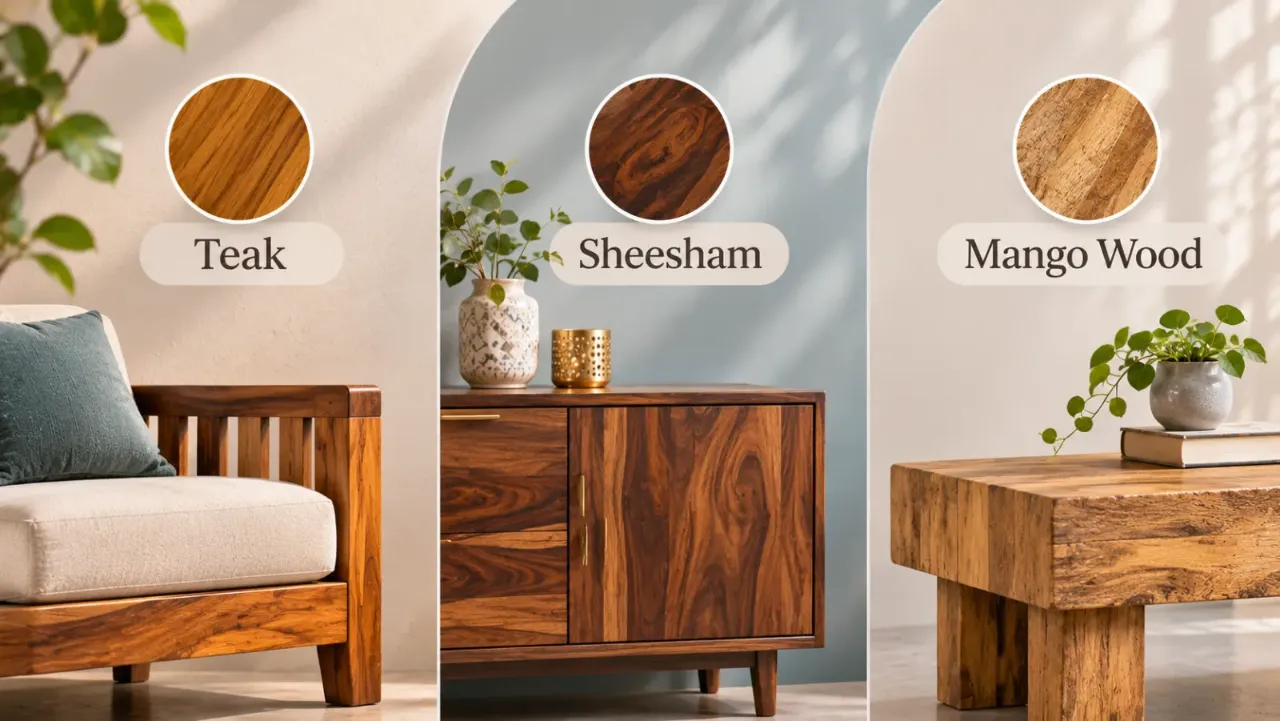
Teak, Sheesham or Mango Wood: Which Is Best for Furniture?
Choosing wooden furniture is about more than selecting a colour or finish. The type of wood affects how a piece looks, feels, performs with everyday use and responds to changing weather. In India, where humidity, monsoon conditions and temperature variations can influence furniture, choosing the right timber is particularly important.
Teak, sheesham and mango wood are three popular options in the Indian furniture market. All three can make attractive furniture, but they differ in strength, natural durability, grain, maintenance requirements and price. Teak is often associated with premium, long-lasting furniture. Sheesham is appreciated for its rich grain and strength, while mango wood offers an accessible solid-wood option with a distinctive appearance.
So, which one should you choose for your bed, dining table, wardrobe or coffee table? The answer depends on the furniture's purpose, your budget and the conditions in which it will be used.
1. Understanding the Three Types of Wood
Before comparing their performance, it helps to understand what makes each wood different.
Teak Wood
Teak, also known as sagwan, is valued for its natural oils, durability and relatively good resistance to moisture and decay. Its colour generally ranges from golden honey to medium brown, with a comparatively straight grain.
It is commonly used for premium furniture, door frames, outdoor furniture and pieces intended for long-term use. Its natural properties make it an attractive choice for homes that experience humid conditions, although quality and maintenance still matter.
Sheesham Wood
Sheesham, scientifically known as Dalbergia sissoo, is also called Indian rosewood. It is a dense hardwood with a distinctive grain pattern, often featuring rich brown shades and darker streaks.
Its strength and visual character make it suitable for beds, dining tables, cabinets, chairs and carved furniture. It is often selected by homeowners who want solid wooden furniture without paying the premium associated with higher-grade teak.
However, proper seasoning is important. Poorly dried sheesham can develop cracks or dimensional movement as indoor conditions change.
Mango Wood
Mango wood comes from the mango tree, Mangifera indica. It is used for furniture and decorative products, often featuring varied grain patterns and shades ranging from pale yellow to warm brown.
It is generally more affordable than teak and many sheesham furniture options. Its appearance suits contemporary, rustic and eclectic interiors.
Mango wood can work well for tables, shelves, cabinets and accent furniture. However, it needs appropriate drying, treatment and finishing because it is generally less naturally durable than teak and sheesham heartwood.
2. Teak vs Sheesham vs Mango: A Quick Comparison
The three woods are not interchangeable. Their suitability changes depending on how frequently a piece is used, where it is placed and how it is constructed.
| Factor | Teak | Sheesham | Mango Wood |
|---|---|---|---|
| Appearance | Golden to medium brown | Rich brown with darker streaks | Light to warm brown with varied grain |
| Natural durability | High | High for heartwood | Comparatively lower |
| Moisture performance | Generally very good | Good with proper seasoning and finish | Needs careful sealing and protection |
| Hardness and use | Durable, suitable for demanding furniture | Dense and hard-wearing | Generally softer than the other two |
| Maintenance | Relatively manageable | Requires care and a suitable finish | Benefits from regular finish maintenance |
| Price positioning | Premium | Mid to premium | Generally more affordable |
| Common applications | Heirloom furniture, frames, outdoor pieces | Beds, dining tables, cabinets | Accent tables, shelves, cabinets and decorative pieces |
These are general characteristics, not guarantees for every finished product. Timber quality, heartwood content, seasoning, joinery and surface treatment can change the performance of an individual piece.
3. Which Wood Is More Durable?
Durability is one of the biggest considerations when buying furniture, especially for items that will be used every day.
Teak
Teak is widely valued for its natural durability and resistance to moisture and decay. Its natural oil content contributes to its performance, making it a strong option for furniture intended for long-term use.
It is particularly useful when a piece may experience occasional humidity or changing indoor conditions. However, not all teak is identical. Its origin, grade, age and proportion of heartwood can affect quality.
Sheesham
Sheesham is a dense and hard-wearing timber. It is well suited to furniture that needs to withstand regular use, such as dining tables, bed frames and cabinets.
Its main consideration is seasoning. Timber that has not been dried properly may crack, warp or develop gaps after it has been made into furniture.
Mango Wood
Mango wood can be durable enough for many indoor furniture applications when properly seasoned and constructed. However, it is generally more vulnerable to dents, scratches and biological deterioration than teak or sheesham heartwood.
It is a practical choice when the furniture is not expected to face particularly demanding conditions.
What should you choose? For a long-term investment, teak is a strong option. Sheesham is a good choice for everyday indoor furniture, while mango wood works well when budget and appearance are important considerations.
4. How Do These Woods Perform During Indian Monsoons?
Indian homes experience different climate conditions. Coastal areas may have prolonged humidity, while other regions experience significant seasonal changes between dry and wet months.
Wood naturally responds to changes in moisture in the surrounding air. It can absorb or release moisture, leading to expansion or contraction.
- Teak: Its natural characteristics generally make it more stable in humid conditions. It is often preferred when moisture resistance is an important requirement.
- Sheesham: It can perform well indoors when properly seasoned and finished. Poor seasoning can result in cracks, warping or gaps.
- Mango wood: It needs careful seasoning and an appropriate protective finish. Avoid leaving it exposed to dampness or standing water.
Regardless of the species, avoid placing wooden furniture directly against damp walls or in areas where water collects. Keep the room ventilated and attend to leaks or moisture problems promptly.
5. Which Wood Is Best for Different Furniture Pieces?
The right choice also depends on what you are buying. A dining table has different requirements from a decorative side table or a wardrobe.
Beds
Teak and sheesham are both suitable for solid wooden bed frames. Teak is a premium option for long-term use, while sheesham offers strength and a distinctive grain at a generally lower price.
Mango wood may also be considered for a budget-conscious bed, provided the frame, joints and support system are properly designed.
Dining Tables
Dining tables experience frequent contact, movement and occasional spills. Teak is a durable premium choice. Sheesham is popular for its dense construction and rich appearance. Mango wood can work for casual dining spaces, but its finish needs protection from spills and scratches.
Wardrobes and Cabinets
For visible solid-wood furniture, teak and sheesham are useful options. Mango wood can suit smaller cabinets and lighter-use storage pieces.
However, large wardrobe panels are not always best made entirely from solid wood. Solid timber can move with seasonal humidity changes. A well-specified plywood or engineered-board carcass with a suitable natural-wood veneer may be a more practical solution for large, flat surfaces.
Coffee Tables and Side Tables
All three woods can be used for these pieces. Teak creates a premium, understated look. Sheesham adds a darker and more pronounced grain, while mango wood works particularly well for casual, rustic and contemporary designs.
Outdoor Furniture
Teak is generally the strongest choice among these three for outdoor furniture because of its natural durability. Even teak needs an appropriate outdoor finish and maintenance, particularly if it is exposed to direct rain and sunlight.
Sheesham and mango wood are better suited to protected indoor spaces unless the manufacturer specifies a suitable treatment and outdoor-use system.
6. How Do They Compare in Appearance?
Wood is also an important design decision. Its natural colour and grain influence the overall mood of a room.
Teak: Warm and Timeless
Teak's golden and honey-brown shades work well with neutral palettes, cream upholstery, beige walls and traditional Indian interiors. It can also complement modern spaces where natural materials are used to add warmth.
Sheesham: Rich and Distinctive
Sheesham has a more pronounced grain, with darker streaks and contrasting brown tones. It can become a statement feature in a dining room, living room or bedroom. It pairs well with neutral walls, earthy colours, brass accents and traditional detailing.
Mango Wood: Casual and Contemporary
Mango wood often has a lighter appearance and more varied grain. Depending on its finish, it can suit minimalist, rustic, bohemian and contemporary interiors. It is particularly useful when you want wooden furniture without making the room feel too heavy.
7. What About the Cost?
Price is one of the main reasons homeowners compare these three woods.
In general, mango wood is positioned as a more affordable option, sheesham occupies a middle or mid-premium range, and quality teak is usually the premium choice.
However, there is no reliable single price for each species. Finished furniture prices depend on:
- The grade, origin and quality of the timber.
- The amount of solid wood used in the piece.
- Whether the timber is seasoned or kiln-dried.
- The complexity of the design and joinery.
- The polish, coating and finishing system.
- The manufacturer, workmanship and warranty.
A teak-finished product is not necessarily made from solid teak. Similarly, a listing that says "solid wood" does not identify the species.
Ask for the actual wood species and construction details before comparing quotations. Compare products of similar dimensions, design, thickness and finish rather than judging them by the total price alone.
8. How to Check Wood Quality Before Buying
Even the right species can disappoint if the timber is poorly prepared or the furniture is badly constructed.
- Confirm the species: Ask whether the furniture is made from teak, sheesham or mango wood. Have the species mentioned on the invoice or product specification.
- Ask about seasoning: Find out whether the timber has been kiln-dried or properly seasoned. Proper drying helps reduce the risk of cracking and warping.
- Inspect the grain: Look for major cracks, loose knots, uneven surfaces and visible defects.
- Check the joints: Examine how the legs, frames, panels and other structural parts are connected. Good joinery is essential for long-term performance.
- Understand the construction: Ask which parts are solid wood and which use plywood, MDF, veneer or other engineered materials.
- Ask about treatment: Find out what protection has been used against termites, fungi and other biological damage, particularly for less naturally durable timber.
- Review the finish: Check whether all visible and hidden surfaces have been properly finished and ask about cleaning and maintenance.
- Get the details in writing: Confirm the species, construction, finish, warranty and care instructions before paying.
9. Common Mistakes to Avoid
Some buying mistakes can lead to disappointment even when the furniture looks attractive in a showroom.
- Choosing based only on the wood's colour or polish.
- Assuming that every product labelled "rosewood" is the same species.
- Believing that any solid wood is automatically termite-proof.
- Ignoring seasoning and moisture-related movement.
- Paying a premium without confirming which parts are actually solid wood.
- Using indoor furniture in exposed outdoor conditions.
- Comparing prices without checking dimensions, thickness and construction.
Remember that a well-made piece of properly seasoned mango wood can be more satisfactory than poorly constructed furniture made from a supposedly premium species.
10. So, Which Wood Should You Choose?
The best choice depends on your priorities rather than a universal ranking.
- Choose teak if you want premium furniture, long-term durability and better natural resistance to moisture and decay.
- Choose sheesham if you want strong, visually distinctive solid-wood furniture for everyday indoor use.
- Choose mango wood if you want a more affordable solid-wood option for accent furniture and suitable indoor applications.
For most homeowners, the decision should come down to the furniture's purpose, the room's conditions and the quality of the actual product. A well-seasoned timber, good joinery and a suitable finish will make a significant difference to how the furniture performs over time.
Closing Thoughts
Teak, sheesham and mango wood each have a place in Indian homes. Teak offers premium durability, sheesham combines strength with a distinctive natural grain, and mango wood provides an accessible way to bring solid wood into everyday interiors.
Before making a purchase, look beyond the showroom finish. Check the timber species, seasoning, construction and maintenance requirements. Choosing the right material at the beginning can help you create furniture that looks good and serves your home well for years.
Explore More with Walls to Wonder
Planning your home interiors? Explore Walls to Wonder's AI-powered tools to visualise spaces, discover your style and make more informed design decisions.
- Whole Home Visualizer
- Design My Room
- Interior Design Cost Estimate
- Interior Quotation Checker
- Rate My Room Design
- Interior Style Finder
Discover more ideas and tools at Walls to Wonder.
Turn this idea into a plan for your home
Visualise your space, understand the likely budget, or find a professional who can bring the idea to life.