
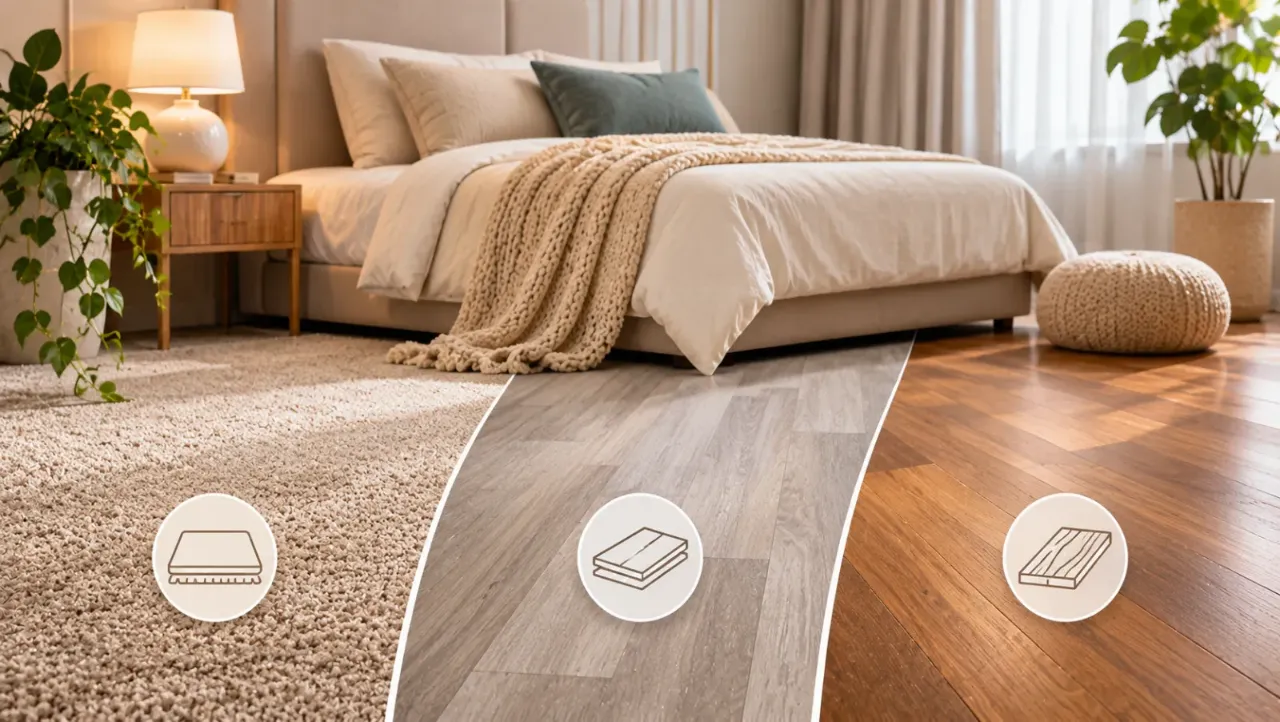
Carpet vs Vinyl vs Wooden Flooring: Which Is Best for Bedrooms?
The flooring in a bedroom does more than complete the interior design. It influences how warm the room feels, how comfortable it is to walk across, how much cleaning it needs and how well it handles everyday use.
In Indian homes, the choice becomes even more important because flooring has to work through changing seasons, monsoon humidity, dust and different household routines. A floor that looks beautiful in a catalogue may not be the most practical choice for your bedroom.
Carpet, vinyl and wooden flooring are three popular options, but each offers a different combination of comfort, appearance, maintenance and durability. Carpet creates a soft surface underfoot, vinyl offers practical maintenance and design flexibility, while wooden flooring brings a natural or wood-inspired finish to the room.
So, which one should you choose? Let's compare them across the factors that actually matter.
1. Understanding the Three Flooring Options
Before comparing their advantages and disadvantages, it is important to understand what each flooring type involves.
Carpet Flooring
Carpet is a textile floor covering that can be installed across the entire bedroom or used as a smaller area rug. It is available in different fibres, pile heights, colours and textures.
Common options include:
- Wool carpet: A natural fibre option with a soft, warm feel.
- Nylon carpet: A synthetic option known for resilience and everyday wear.
- Polyester carpet: Often selected for its colour range and soft texture.
- Polypropylene carpet: A synthetic option commonly used for budget-conscious applications.
Carpet can make a bedroom feel warmer, quieter and more comfortable. However, the fibre, pile, backing and cleaning requirements should all be considered before choosing it.
Vinyl Flooring
Vinyl flooring is a synthetic floor covering available in sheets, planks and tiles. It can reproduce the appearance of wood, stone and other materials without using those materials as its actual surface.
Common types include:
- Sheet vinyl: Supplied in rolls and installed across larger areas with fewer visible seams.
- Luxury Vinyl Tiles (LVT): Individual tiles designed to imitate materials such as stone or wood.
- Luxury Vinyl Planks (LVP): Plank-shaped vinyl flooring, often used to create a wood-floor appearance.
- SPC flooring: A rigid-core vinyl flooring product with a stone-plastic composite core.
Vinyl is popular for its design flexibility, relatively straightforward cleaning and suitability for many everyday indoor applications. However, quality varies considerably, particularly in wear layers, surface texture and installation systems.
Wooden Flooring
Wooden flooring adds warmth and a natural material character to a bedroom. However, the term covers several products that behave differently.
- Solid wood: Made from a single piece of timber, with the possibility of sanding and refinishing depending on its thickness and condition.
- Engineered wood: Uses a real wood top layer attached to a layered, more dimensionally stable core.
- Laminate flooring: Uses a decorative wood-look image beneath a protective surface layer. It is not solid wood and does not have a real-wood surface.
This distinction matters. Engineered wood and laminate should not be treated as identical products simply because both can look like timber flooring.
2. Carpet vs Vinyl vs Wooden Flooring: A Quick Comparison
Each flooring option has strengths, but the right choice depends on what you value most in a bedroom.
| Factor | Carpet | Vinyl | Wooden Flooring |
|---|---|---|---|
| Underfoot comfort | Soft and cushioned | Firm, with some variation by product | Firm, with a naturally warm feel |
| Warmth | Generally high | Moderate | Generally warm compared with many hard surfaces |
| Sound absorption | Very good | Limited | Depends on construction and underlay |
| Cleaning | Requires regular vacuuming and occasional deep cleaning | Generally easy to sweep and damp-mop | Requires product-specific cleaning |
| Moisture performance | Can retain moisture if not dried properly | Generally good, depending on product and installation | Varies by solid, engineered or laminate construction |
| Scratch resistance | Depends on fibre and pile | Depends on wear layer | Depends on wood species and surface finish |
| Design options | Colours, patterns and textures | Wood, stone and abstract designs | Natural wood grains or printed wood-look finishes |
| Maintenance | Relatively high | Generally low | Low to moderate, depending on type |
| Allergy considerations | Can retain dust and allergens | Easier to clean as a hard surface | Easier to clean as a hard surface |
| Best suited for | Comfort-focused bedrooms | Practical, easy-care bedrooms | Warm, natural-looking interiors |
These are general comparisons. The actual performance depends on the product specification, installation quality, room conditions and maintenance.
3. Comfort Underfoot: Which Flooring Feels Best?
A bedroom is one of the first places you walk into after waking up and one of the last places you spend time before sleeping. The surface underfoot can make a noticeable difference.
Carpet: The Softest Option
Carpet offers the most cushioning among the three choices. It feels comfortable when walking barefoot, sitting on the floor or getting out of bed.
It can be particularly useful in bedrooms where children play on the floor or where a softer surface is preferred. However, comfort depends on the carpet's fibre, pile and underlay. A thick carpet with a suitable underlay will feel different from a thin, tightly woven one.
Vinyl: Firm and Practical
Vinyl provides a smooth, firm surface. It does not offer the same cushioning as carpet, but certain products can feel slightly softer underfoot than traditional hard flooring.
Its comfort also depends on the subfloor, product thickness and any approved underlay used during installation.
Wooden Flooring: Warm and Natural
Wooden flooring offers a firm walking surface with a natural visual and tactile character. It can feel warmer and less visually cold than many stone or ceramic floors.
Engineered wood and solid wood can provide an authentic timber surface, while laminate gives a wood-inspired appearance without the same natural material feel.
Verdict: Carpet is the strongest choice for softness and cushioning. Wooden flooring is suitable when you prefer a warm, natural finish, while vinyl is a practical option when easy maintenance is a priority.
4. Cleaning and Maintenance: Which Is Easier to Maintain?
The amount of maintenance a floor needs can influence whether it remains attractive after years of everyday use.
Maintaining Carpet
Carpet needs regular vacuuming because dust, hair and other particles can settle between its fibres.
Spills should be treated promptly, following the manufacturer's cleaning instructions. Some carpets may also require periodic professional cleaning.
A few practical habits can help:
- Vacuum regularly, especially around the bed and under furniture.
- Use washable rugs or removable mats where practical.
- Avoid allowing spills to soak into the carpet backing.
- Ensure the carpet dries completely after cleaning.
- Follow the recommended cleaning method for the specific fibre.
Wall-to-wall carpet requires more attention than a small removable rug because the entire floor covering cannot be taken outside for cleaning.
Maintaining Vinyl
Vinyl is generally easier to maintain. Regular sweeping or vacuuming removes loose dirt, while a lightly damp mop can handle everyday cleaning.
However, avoid assuming that every vinyl product can withstand excessive water, harsh chemicals or steam cleaning. Follow the manufacturer's instructions.
Use furniture pads under heavy pieces and avoid dragging furniture across the surface.
Maintaining Wooden Flooring
Wooden flooring needs product-specific care.
For solid and engineered wood, avoid excessive water and clean spills promptly. Use cleaning products approved for the finish, whether it is lacquered, oiled or otherwise treated.
Laminate flooring also needs care around joints because moisture can enter the core and cause swelling. Use a well-wrung mop rather than soaking the floor.
Verdict: Vinyl is generally the easiest option for routine cleaning. Wooden flooring requires careful moisture management, while carpet needs the most regular attention to keep it free from embedded dirt.
5. How Do They Perform in Indian Weather?
Indian weather can influence flooring performance, particularly during the monsoon. Humidity, water seepage, damp subfloors and poor ventilation can affect different flooring materials in different ways.
Carpet During Monsoons
Carpet can absorb and retain moisture, especially when spills, leaks or dampness reach its backing or underlay. If it remains wet, it may develop unpleasant odours or mould-related problems.
For bedrooms with recurring dampness, wall-to-wall carpet is not the most practical option.
Vinyl During Monsoons
Many vinyl products offer good resistance to moisture. However, this does not mean that every vinyl floor or installation is waterproof in every situation.
Water can still reach the subfloor through poorly sealed edges, joints or installation defects. A moisture problem beneath the flooring needs to be addressed rather than simply covered.
Wooden Flooring During Monsoons
Wood naturally responds to changes in moisture. It can expand when it absorbs moisture and contract as it dries.
Solid wood is generally more sensitive to changes in humidity than a well-constructed engineered wood floor. Laminate can also swell if water reaches its fibreboard core.
For Indian homes, check the manufacturer's humidity recommendations, subfloor moisture requirements and installation method before choosing any wood-based flooring.
Verdict: Vinyl is often the more practical choice where moisture resistance is important. Engineered wood can be considered when you want a real wood surface, provided the product and installation are suitable for the room. Carpet is better suited to dry, well-ventilated bedrooms.
6. Which Flooring Is Better for Dust and Allergies?
Flooring can influence how easily dust, pet hair and allergens are removed from a bedroom.
Carpet fibres can trap dust, pet dander and dust-mite allergens. This does not mean every carpet automatically causes allergies, but it can make cleaning more demanding.
For people with dust-mite allergies or significant respiratory sensitivities, hard flooring such as vinyl or wood is often easier to keep clean.
A few things to consider:
- Carpet: Needs regular vacuuming, preferably with a suitable HEPA-filter vacuum, and periodic deep cleaning.
- Vinyl: Its smooth surface makes dust and loose particles easier to remove with a damp mop.
- Wood: Also provides a hard surface that can be cleaned without particles becoming embedded in fibres.
If you prefer carpet, consider a low-pile option or a washable area rug rather than covering the entire bedroom. This makes cleaning easier.
Verdict: Vinyl and wooden flooring are generally easier to maintain in bedrooms where dust control is a priority. Carpet can still be used, but cleaning routines become especially important.
7. What About Cost and Long-Term Value?
Flooring costs depend on more than the price of the material. The final amount can include subfloor preparation, underlay, adhesives, installation labour, skirting, trims and wastage.
The broad cost positioning is usually:
- Carpet: Entry-level synthetic carpets can be economical, while wool and premium carpets can be significantly more expensive. Installation and underlay add to the total.
- Vinyl: Basic vinyl products can be budget-friendly, while higher-quality LVT and SPC options cost more depending on their construction and wear layer.
- Wooden flooring: Laminate is generally more affordable than engineered or solid wood. Engineered wood and solid timber are usually positioned as premium choices.
Rather than relying on a single per-square-foot estimate, request an installed quotation for the exact product and room.
Ask whether the quotation includes:
- Material cost and wastage.
- Subfloor levelling and moisture testing.
- Underlay or adhesive.
- Installation labour.
- Skirting, edge trims and transitions.
- Removal and disposal of existing flooring.
- Warranty and maintenance requirements.
A cheaper material may not offer better long-term value if it needs early replacement or has limited suitability for the room.
8. Which Flooring Looks Best in Different Bedroom Styles?
Flooring should complement the bedroom's furniture, wall colours, lighting and overall design language.
Modern Minimalist Bedroom
A light oak-look vinyl plank or pale engineered wood floor can create a clean, uncluttered appearance. Pair it with neutral walls, simple furniture and soft textiles.
Warm, Luxurious Bedroom
A natural wood floor in a warm brown shade can work well with upholstered headboards, layered lighting, beige fabrics and subtle metallic accents.
Cosy, Comfort-Focused Bedroom
A soft carpet in beige, taupe or muted grey can make the room feel more inviting. It works particularly well with upholstered furniture and layered bedding.
Contemporary, Practical Bedroom
A wood-look vinyl floor can give the room a timber-inspired appearance while keeping everyday cleaning relatively simple. Choose a finish that complements the furniture rather than competing with it.
9. Common Flooring Mistakes to Avoid
A flooring decision can become expensive to correct if important practical details are ignored.
- Choosing only by appearance: A beautiful floor may not suit the room's moisture conditions or cleaning routine.
- Ignoring the subfloor: Uneven or damp subfloors can affect installation and long-term performance.
- Treating all wood-look flooring as real wood: Laminate and vinyl imitate timber but have different construction and repair requirements.
- Installing carpet in damp rooms: Moisture trapped in the backing or underlay can create persistent problems.
- Ignoring product specifications: Check wear layers, warranties, underlay requirements and cleaning instructions.
- Overlooking indoor air quality: Ask about emissions and choose products and adhesives with appropriate low-emission certifications where available.
- Forgetting furniture protection: Heavy beds, wardrobes and chairs can scratch or indent certain flooring surfaces.
10. How to Choose the Right Flooring for Your Bedroom
The most suitable option depends on how you use the room and what matters most to you.
- Choose carpet if softness, warmth and sound absorption are your priorities, and you are comfortable with regular cleaning.
- Choose vinyl if you want easy maintenance, design flexibility and better resistance to everyday moisture.
- Choose wooden flooring if you prefer a natural timber surface or a warm wood-inspired appearance and are prepared to follow the product's care requirements.
For a bedroom that experiences high humidity or has a history of dampness, investigate the moisture source and resolve it before installing a new floor. For a bedroom where dust control is important, a hard floor with a washable area rug may be easier to maintain than wall-to-wall carpet.
Closing Thoughts
Carpet, vinyl and wooden flooring can all work in bedrooms, but they create different experiences. Carpet brings softness and absorbs sound, vinyl offers practical cleaning and design flexibility, and wooden flooring adds a warm, natural or wood-inspired finish.
The best choice is not necessarily the most expensive or the most fashionable one. Consider your room's climate, daily use, maintenance routine and budget before making a decision.
A carefully selected floor, installed over a properly prepared subfloor, can make your bedroom more comfortable, functional and visually complete.
Explore More with Walls to Wonder
Planning your home interiors? Explore Walls to Wonder's AI-powered tools to visualise spaces, discover your style and make more informed design decisions.
- Whole Home Visualizer
- Design My Room
- Interior Design Cost Estimate
- Interior Quotation Checker
- Rate My Room Design
- Interior Style Finder
Discover more ideas and tools at Walls to Wonder.
Turn this idea into a plan for your home
Visualise your space, understand the likely budget, or find a professional who can bring the idea to life.