
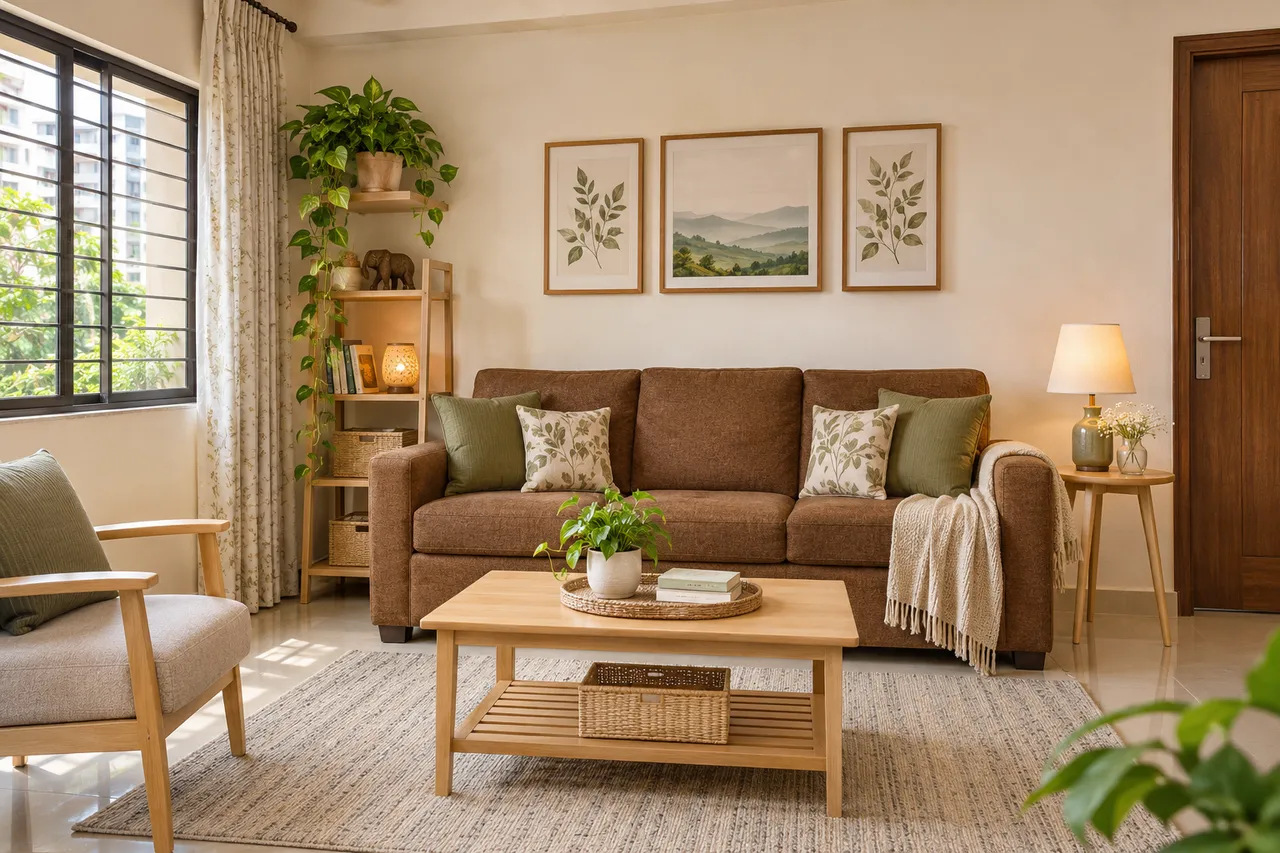
AI Living Room Ideas With Your Existing Brown Sofa: Three Palettes to Compare
Use AI to compare wall colours, textiles and lighting around your existing brown sofa before replacing furniture. Keep the sofa, windows and main circulation fixed in the brief, then test warm neutral, olive and muted-blue directions. Check real samples and dimensions afterward so the chosen concept becomes a practical room refresh rather than another furniture-shopping list.
A brown sofa can be the strongest starting point in a living room. Its size, condition and colour already influence the space, and retaining it can keep the project focused. Begin by deciding whether you want a lighter background, a richer accent or a cooler balance. Use these three directions to narrow your preferences before ordering samples or approaching a designer.
Design options to compare
Idea 1: warm neutral with texture
Keep the brown sofa and use a warm off-white background, a lighter textured rug and restrained cushions. Pale timber and a simple floor lamp can make the room feel coordinated without a large new feature wall. Ask the AI tool to retain the sofa’s shape and position, not to substitute a more photogenic cream sectional. Then review whether the concept still has enough contrast between the sofa, rug and floor. A room full of similar mid-tones can appear flat even when every individual item is attractive.
Idea 2: an olive accent without changing the whole room
Compare olive cushions, a small painted surface or selected accessories against the retained brown upholstery. Keep the amount of green controlled so that the sofa remains part of a coherent composition. Request one concept with accessories only and another with a wall change, then compare the disruption and cost. The physical sample matters: olive can look different beside warm brown fabric and under your evening lights. Do not order paint from the rendered colour alone.
Idea 3: muted blue with a lighter background
A muted-blue direction can be tested through textiles, artwork or an accent chair while the sofa stays in place. Ask for a lighter wall and rug so the blue does not become another large dark area. Keep the same camera view across the concepts. If the AI moves the sofa, widens the room or adds a window to improve the picture, reject that result as a comparison. Choose the palette only after checking the unchanged furniture arrangement and the real room’s daylight.
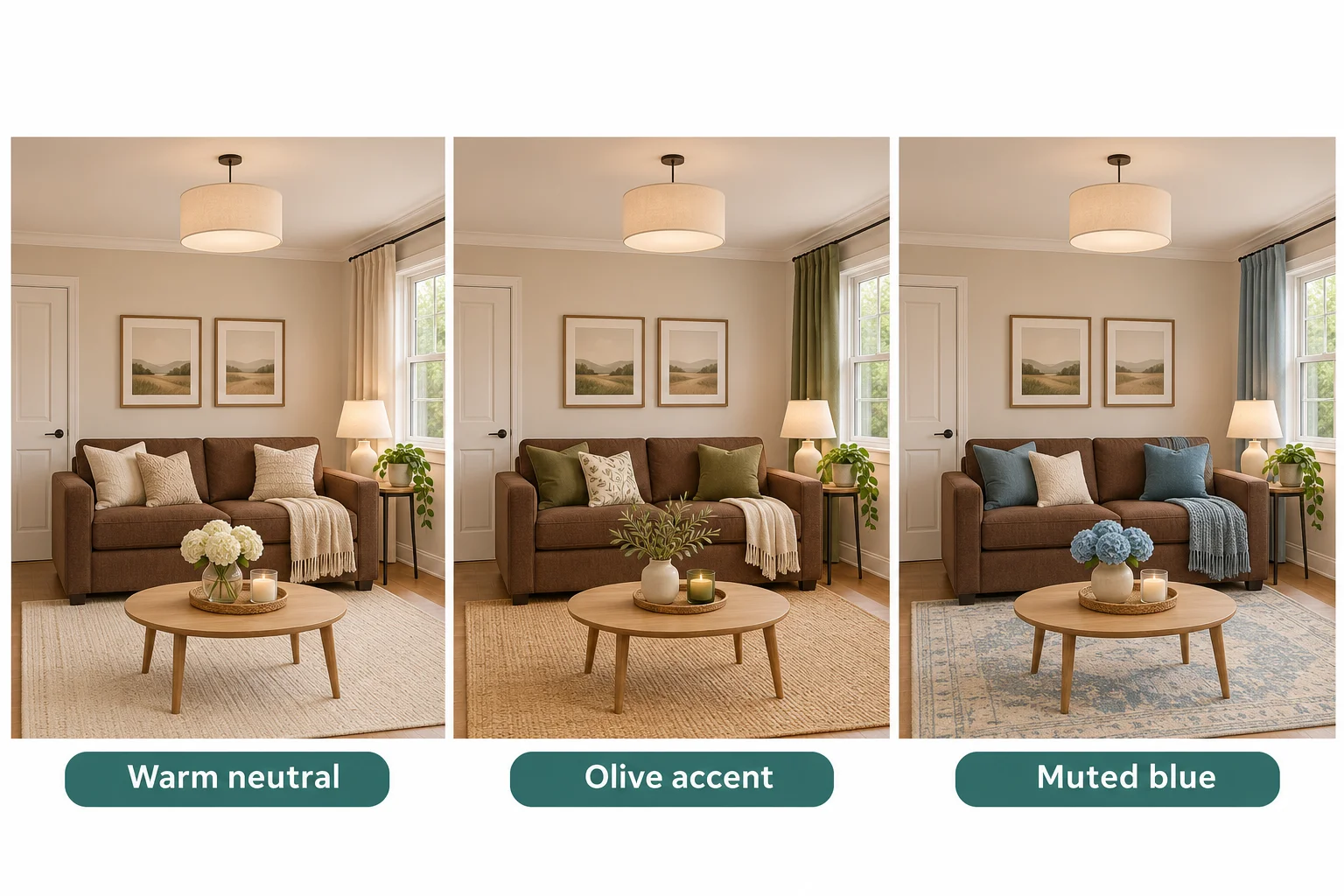
Compare what changed in each image: wall area, rug size, curtain position, lamp footprint and the amount of accent colour. A useful concept leaves the sofa and route recognisable. Ask whether the room is more comfortable for reading, conversation or television rather than merely looking brighter in a render. Keep the chosen image next to a short retained-and-new item list so a supplier understands what is actually being ordered.
Further planning reference: IKEA examples of changing a room around one sofa.
A sample brief for an AI tool
Retain my existing medium-brown sofa, its dimensions and position. Keep the doors, windows, ceiling and walking route unchanged. Show a living-room refresh using warm off-white, restrained olive textiles and light timber accents. Change only wall colour, rug, cushions, curtains and loose lighting. Do not add built-in furniture or imply a priced shopping list.
Use this where the selected tool supports written instructions, or translate it into the controls available.
Step-by-step planning
Record the sofa dimensions, upholstery colour and condition, then photograph the room in ordinary daylight. Remove personal documents and identify doors, windows and furniture that must remain.
Create a short retained-items list and choose three palette directions. Keep the same photo, viewpoint and main furniture constraints so the concepts can be compared on useful terms.
Generate a small initial set using the controls the chosen tool actually provides. If it accepts a written brief, adapt the sample prompt; otherwise map the brief into colour and furniture preferences.
Reject concepts that replace the sofa, alter openings or hide circulation. Collect the actual items needed for the preferred direction, with sizes and a separate shopping or contractor quotation.
Test paint and fabric samples in daytime and evening light. Buy the most reversible changes first, then reassess the room before committing to fixed finishes or a large furniture purchase.
A practical decision example
A homeowner dislikes a heavy brown-on-brown living room and expects to replace the sofa. The three concepts show that a lighter rug, quieter curtains and a more considered accent can change the overall balance. They test samples and keep the sofa because it still works for the household. Another homeowner might find the sofa itself uncomfortable or damaged; a colour exercise does not settle that separate replacement decision.
Planning budget and scope
| Scope | Illustrative allowance |
|---|---|
| Textile and accessory refresh | ₹8,000–₹20,000 |
| Add painting and selected loose lighting | ₹20,000–₹45,000 |
| Larger refresh with an additional furniture item | ₹45,000+ |
These are editorial planning allowances for physical changes, not AI-service prices or a quotation for the illustrated room. They exclude replacement of the retained sofa, major electrical work and custom cabinetry. Price the selected products, quantities, delivery and installation separately. A budget preference entered into an AI tool guides appearance and does not generate a reliable costed bill.
How much time should you allow?
Allow one or two evenings to compare concepts, followed by sample checking and quotations. A loose-item refresh follows stock and delivery; painting or electrical work needs its own programme. Do not buy every item in the concept at once: a phased order lets you confirm the palette in the real room.
Turn the preferred concept into a useful brief
Use WallsToWonder Design My Room to explore a photo-based concept with your room, style and furniture preferences. Sign in and check the current generation allowance or paid options before starting. Compare the result with the original photo, then save the version that best expresses your priorities.
For physical work, organise the scope with the interior cost planning tool and request an itemised quotation. Bring your measurements, retained-item list and preferred concept when you find an interior designer. Read From Mood Boards to Visual Briefs: How AI Is Changing Designer Conversations for the next planning step.
Frequently asked questions
Will AI keep my sofa exactly unchanged?
Retention instructions guide the result but do not guarantee identical geometry or upholstery. Compare the output with your original photograph and reject substitutions that undermine the exercise.
Which palette is best with brown?
Test the brown’s undertone, daylight and retained finishes. Warm neutral, olive and muted blue are starting directions here, not universal rules or a ranked list.
Can I use a free AI interior-design tool?
Check the current allowance and feature limits of the selected service. Compare one useful result before paying for more; a free allowance is not a promise of unlimited generation or refinement.
Can I buy the rug directly from the picture?
Use the picture to define an approximate look, then measure the actual seating arrangement and compare real product sizes, materials and care requirements.
What should I take to a designer?
Bring the original photo, room measurements, retained sofa details, preferred concept and a list of the changes you want. Separate preferences from items already approved for purchase.
Turn this idea into a plan for your home
Visualise your space, understand the likely budget, or find a professional who can bring the idea to life.