
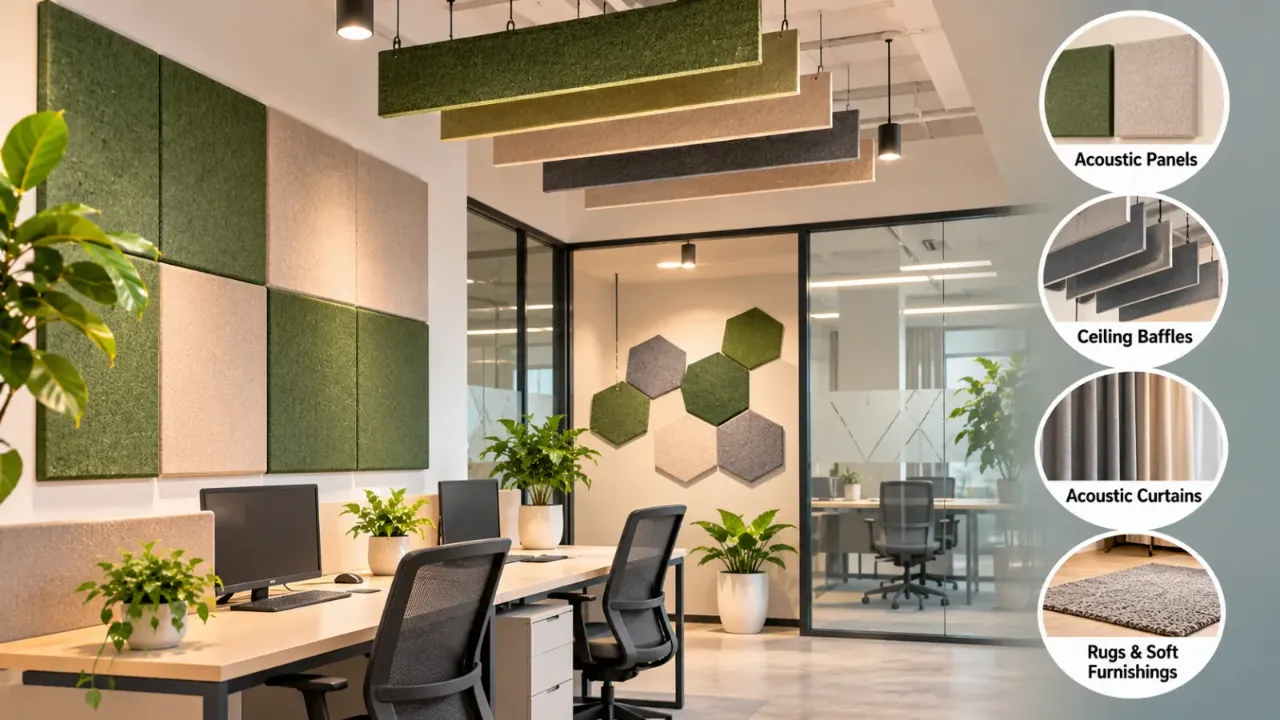
Acoustic Treatment for Offices on a Budget
An office does not need to be completely silent to be comfortable, but constant conversations, echoing footsteps, ringing phones and meeting-room noise can make it difficult to concentrate. This is especially noticeable in open-plan offices, where several activities happen in the same space.
The common assumption is that acoustic treatment requires expensive soundproof rooms, specialised ceilings or a complete interior renovation. In reality, many offices can improve their acoustic comfort through a combination of better space planning, soft furnishings, targeted sound-absorbing materials and a few carefully chosen upgrades.
The important thing is to identify the actual noise problem before spending money. A room that echoes needs a different solution from a meeting room where conversations can be heard outside.
1. Understand the Difference Between Acoustic Treatment and Soundproofing
Before selecting materials, it helps to understand two terms that are often used interchangeably.
Acoustic treatment improves the sound quality within a room. It reduces reflected sound, echo and excessive reverberation, making conversations and calls easier to understand.
Soundproofing aims to reduce sound travelling from one space to another. It usually involves construction details such as heavier partitions, sealed gaps, suitable doors and properly treated ceiling junctions.
For example, acoustic panels on a meeting-room wall may reduce echo inside the room. However, they will not necessarily stop people outside from hearing the meeting.
This distinction matters when working with a limited budget. Identify whether the main complaint is echo, distracting conversations, equipment noise or a lack of privacy. Then choose the appropriate intervention.
2. Start with the Office Layout Before Buying Materials
One of the most affordable ways to improve office acoustics is to rearrange the space.
When quiet workstations sit next to reception counters, pantry areas, printers or meeting zones, employees are exposed to unnecessary noise throughout the day.
Consider these changes:
- Place printers, photocopiers and other frequently used equipment away from focused workstations.
- Keep the pantry and informal discussion areas away from quiet work zones.
- Position meeting tables and collaboration areas in a separate section wherever possible.
- Avoid placing several employees who regularly attend calls in one compact cluster.
- Use existing storage units or suitable furniture to create some separation between activity zones.
Even a small office can benefit from clear activity zoning. The aim is not to build more rooms but to reduce direct exposure to noisy activities.
3. Use Rugs and Carpet Tiles to Reduce Floor Noise
Hard flooring such as vitrified tiles, stone and polished concrete reflects sound. It also allows footsteps and chair movement to become more noticeable.
A rug or carpet tile installation can help absorb some of the sound generated within the office.
Consider using carpet tiles in:
- Workstation clusters
- Small meeting areas
- Informal discussion corners
- Reception seating zones
Carpet tiles are particularly useful because damaged or stained sections can be replaced individually. Choose commercial-grade options that can handle regular foot traffic and routine cleaning.
If a full carpet installation is outside the budget, begin with a few clearly defined zones. Make sure floor treatments do not create trip hazards or obstruct accessible routes.
4. Add Acoustic Panels Where They Will Make a Difference
Acoustic wall panels are among the most recognisable solutions for office noise control. They absorb sound reflections and can make rooms with hard walls and ceilings feel less echo-prone.
However, covering every wall is rarely necessary.
Start with the surfaces that contribute most to the problem, such as:
- Walls near meeting tables
- Large empty walls opposite speaking areas
- Workstation walls where conversations reflect back into the room
- Small meeting rooms with noticeable echo
PET felt panels and fabric-wrapped acoustic panels are common options. Their performance depends on thickness, material, mounting method and the product's tested acoustic rating.
When comparing products, look at the Noise Reduction Coefficient (NRC). It is a measure of sound absorption, not a soundproofing rating. Ask suppliers for test information for the exact product and installation arrangement rather than relying only on decorative descriptions.
A few correctly positioned panels with documented performance can be more useful than a large quantity of decorative foam.
5. Make Better Use of Curtains and Soft Furnishings
Not every acoustic improvement needs to look like a technical installation.
Curtains, upholstered chairs, fabric-covered noticeboards and other soft finishes can help reduce sound reflections, particularly when an office has extensive glass and hard surfaces.
Budget-friendly additions include:
- Heavy, lined curtains for suitable windows or glazed areas
- Upholstered chairs in meeting and waiting areas
- Fabric-covered pinboards in work zones
- Soft seating in informal discussion corners
- Fabric screens between selected workstations
These elements can contribute to a more comfortable acoustic environment while also making the office feel warmer.
Choose materials that are suitable for commercial use, easy to maintain and appropriate for the office's fire-safety requirements. Curtains and soft furnishings should not obstruct ventilation, emergency exits or required access.
6. Introduce Desk Screens and Dividers
In an open-plan office, conversations from neighbouring workstations can become a constant distraction.
Desk screens create a degree of separation between employees and can reduce direct sound exposure. Some products also include sound-absorbing materials.
Options include:
- PET felt desk dividers
- Fabric-wrapped workstation screens
- Freestanding acoustic screens
- Upholstered partitions between selected desks
A divider is not a substitute for a full-height sound-insulated wall. Its effectiveness depends on its height, width, material and position. Nevertheless, it can help create a more defined workstation environment without changing the entire floor plan.
Prioritise desks where employees regularly attend calls or need longer periods of focused work.
7. Consider Acoustic Ceiling Tiles and Baffles
The ceiling is often one of the largest uninterrupted surfaces in an office. In spaces with hard flooring, glass partitions and plastered walls, sound can repeatedly reflect between these surfaces.
If the office already has a suspended ceiling, replacing selected ceiling tiles with tested acoustic tiles may be worth considering.
For offices with exposed ceilings, suspended acoustic baffles or ceiling rafts can provide absorption without requiring a complete false ceiling.
These options may involve a higher initial investment than rugs or curtains, so they should be considered after identifying the main problem areas. Check ceiling load capacity, suspension details, fire performance, maintenance access and coordination with lights, sprinklers, HVAC and other services.
8. Reduce Noise at Its Source
Sometimes the most effective solution is to reduce the noise being generated rather than adding more absorbing material.
Review everyday office activities and equipment.
- Use quieter printers and office equipment where replacement is already planned.
- Place noisy equipment in a separate utility area or enclosure designed with suitable ventilation.
- Add appropriate pads under movable furniture to reduce scraping sounds.
- Maintain loose fixtures, rattling panels and noisy doors.
- Encourage employees to use meeting rooms or designated call areas for extended conversations.
- Set practical guidelines for phone calls and informal discussions in shared work zones.
These changes cost little in comparison with a major acoustic renovation and can address recurring sources of disturbance.
9. Create Quiet Zones and Call Areas
A small office may not have space for several enclosed rooms, but it can still provide different types of work areas.
Create a quiet zone for tasks that require concentration. Keep informal discussions, collaborative work and frequent calls in separate areas where possible.
If the office has a suitable unused corner, consider a compact call area with:
- A desk or small work surface
- A comfortable chair
- A soft wall finish or acoustic screen
- Adequate lighting and ventilation
- Access to power and connectivity
A call area does not have to be a fully enclosed acoustic pod. The purpose is to provide a more appropriate place for conversations without disturbing the rest of the team.
10. Choose Materials Based on Performance, Not Appearance Alone
Acoustic products are available in many colours, shapes and finishes. But a material that looks sound-absorbing may not provide meaningful acoustic performance.
Compare products using the following points:
| Material or solution | Main benefit | Budget consideration |
|---|---|---|
| Rugs and carpet tiles | Reduce some floor reflections and footfall noise | Useful for treating selected zones |
| PET felt panels | Absorb sound reflections and provide a clean finish | Check thickness and tested performance |
| Fabric-wrapped panels | Provide targeted sound absorption | Compare the core material and fabric |
| Desk screens | Create separation between workstations | Buy for priority desks first |
| Curtains | Soften reflections from suitable glazed areas | Performance depends on fabric and fullness |
| Acoustic ceiling tiles | Treat a large reflective surface | Best considered during ceiling upgrades |
| Acoustic baffles | Add absorption below exposed ceilings | Check suspension and installation costs |
For wall and ceiling products, ask for the NRC or other relevant laboratory test data. For products intended to block sound between rooms, ask for the appropriate sound-insulation performance information instead.
Also check fire ratings, indoor-air-quality documentation, cleaning requirements and suitability for the office's humidity and maintenance conditions.
11. Plan a Budget-Friendly Acoustic Upgrade
Instead of treating the entire office at once, divide the work into stages.
Stage 1: Low-cost changes
- Rearrange workstations and noisy equipment.
- Establish quiet and collaboration zones.
- Add suitable rugs or carpet tiles to selected areas.
- Use existing upholstered furniture and curtains more effectively.
- Fix rattling doors, furniture and loose fittings.
Stage 2: Targeted acoustic products
- Install panels in echo-prone meeting rooms.
- Add desk screens to high-distraction workstations.
- Introduce fabric-covered boards or suitable soft partitions.
- Treat selected ceiling areas if the layout and budget justify it.
Stage 3: More substantial improvements
- Upgrade acoustic ceiling systems.
- Improve meeting-room partitions and door seals.
- Consider enclosed call areas or acoustic booths.
- Commission a professional acoustic assessment for persistent noise or privacy issues.
This phased approach helps the business understand which changes are working before committing to more expensive solutions.
12. Common Mistakes to Avoid
A budget-friendly project can still waste money if the wrong problem is being treated.
Buying decorative foam without checking performance: A product's appearance does not establish its sound-absorption capability. Ask for tested data.
Expecting wall panels to soundproof a room: Absorption and sound insulation solve different problems.
Treating only the reception wall: Decorative panels in a low-priority area may have little effect on noisy workstations or meeting rooms.
Covering every surface: Excessive absorption can make a space feel acoustically unnatural. Treatment should be planned for the room and its use.
Ignoring doors and ceiling gaps: Sound can travel through gaps, lightweight doors and shared ceiling voids. Panels inside the room will not fix these weak points.
Choosing materials without checking safety and maintenance: Office finishes should meet relevant fire-safety, durability and cleaning requirements.
13. A Practical Checklist Before You Spend
Before approving an acoustic treatment budget, check the following:
- Identify the main sources of noise.
- Decide whether the problem is echo, sound transmission or everyday activity noise.
- Map noisy and quiet activities on the office floor plan.
- Check existing ceiling, floor and wall finishes.
- Identify the areas where treatment will have the greatest impact.
- Compare tested acoustic performance, not just product appearance.
- Obtain installation, maintenance and replacement costs.
- Check fire performance and building-service coordination.
- Implement changes in stages and review the results.
Closing Thoughts
A quieter office does not always require expensive soundproofing systems or a complete interior makeover. Thoughtful space planning, suitable soft furnishings, targeted acoustic panels and better workstation separation can make a noticeable difference when they address the actual source of noise.
The best approach is to begin with the simplest changes, prioritise the areas where employees experience the most disruption and invest in specialised acoustic products only where they are genuinely needed. A well-planned acoustic upgrade is not about making an office silent; it is about making everyday work more comfortable and communication easier.
Explore More with Walls to Wonder
Planning an office interior or evaluating design decisions? Explore Walls to Wonder's AI tools to visualise spaces, understand costs and assess design possibilities.
- Whole Home Visualizer
- Design My Room
- Interior Design Cost Estimate
- Interior Quotation Checker
- Rate My Room Design
- Interior Style Finder
Explore more at Walls to Wonder.
Get a personalised estimate for your home
Choose your rooms, materials and preferences to understand a practical interior budget before you commit.